
It is Tuesday, the dishes are waiting, and you have ten minutes. Is a short lesson, a few lines in a notebook or one practice run of a hard conversation really worth spending them on? For many people, a small effort like that shows up in ordinary ways.
You start to know what you would say no to. A skill that felt shaky gets a little easier after you have done it a few times. A talk at home goes more calmly because you paused first. These things can happen when you practice something specific; they are not promises, and they depend on what you choose to work on.
Below are the changes people tend to notice at home and at work, ideas for different kinds of lives, what to do when it stalls, and one thing to try this week. If you already want goals to copy, the personal development goals post has plenty.
- Start with one skill Pick a single thing you want to get better at, not a whole new you.
- Small wins count One finished attempt is proof you can try the next one.
- Work benefits are possible, not promised New skills can make you more capable and adaptable, but a raise is not guaranteed.
- Make it fit your week Five minutes, a free afternoon and zero money are all real options.
- Ask for help when it is more than a habit Stress or low mood that gets in the way of daily life deserves a health professional.
What you may notice in an ordinary week
Clearer priorities are often the first change. Say a coworker asks you to join one more committee, and you have exactly one free evening. If you have already put into words what matters to you this season, say, time with your kids or finishing a certificate, the answer comes faster, and "I can't take that on right now, but thank you for thinking of me" is easier to say. The same naming helps with small choices, like whether to scroll or go for a short walk.
Habits tend to get easier in a similar way. A habit that sticks usually starts with a first step so small it feels almost silly, tied to something that already happens, such as reading one page after you pour your morning coffee. A light way of keeping track helps too: a tick on the calendar, or one line on your phone. If a step keeps getting skipped, naming the reason ("I am wiped out by 9 p.m.") lets you move it to a better spot.
The VA's Whole Health library lists values, purpose, balance and lifelong learning as parts of personal development planning, which is a handy way to see how wide the topic is. If you are not yet sure what matters to you, the post on the path of self-discovery is a gentle place to start.
Confidence in one skill at a time
The sense that you can do one particular thing grows mostly from doing it. Think of the first time you gave a short update in a meeting. It was probably shaky. The second time was a little easier, because you had proof that you could get through it. That is why confidence tends to be about a specific skill, such as the presentation, the software task or the hard conversation, rather than a permanent change in who you are.

It also means a stumble does not prove you cannot do something. It tells you the first version was too big, or that you needed a different kind of practice. Confidence on its own does not make a task go well, either; the doing is what gives you something to build on.
You can build one skill at any size of day. With five minutes, watch a single lesson on a free app or read one page of a library book on the topic. With a free afternoon, do the whole task once at a relaxed pace, and write down what went fine. With no money at all, practice out loud once: say the request you have been dreading to the bathroom mirror or to a patient friend.
Easier conversations at home and with friends
Many people say the change they value most is in how they talk with the people closest to them. The skill is pausing. Instead of answering a sharp comment on the spot, you buy yourself a minute. "Can I think about that and answer you after dinner?" gives everyone room. So does "I want to hear this, give me a minute."
Saying what you need can be part of it too. "I am too tired to decide tonight, can we pick tomorrow?" is a plain, kind sentence that heads off a lot of tension. The aim is a more deliberate response, not perfect calm, and no practice can promise that every relationship will improve, since the other person has a say too.
If you like having a name for these skills, a Spanish-language guide from a distance-learning university groups empathy, social skills and assertiveness as skills a person can practice. On a five-minute day, try one pause. On a free afternoon, think back on a recent talk and write the one sentence you wish you had said. For no money at all, ask a friend to practice a tough request with you.
What it can do for you at work
At work, building skills can make you more capable and more adaptable. You may feel readier to learn a new tool, a little more willing to take on a task you would once have passed along, and calmer when a process changes. None of that guarantees a raise, a promotion or a new job, and the support your employer gives and the size of your workload matter a great deal.

UNESCO describes adult learning as a way to build the knowledge and skills people need as work and daily life keep changing. For you, that might be as simple as asking for one practice session on the new software and writing down the steps as you go.
If you want a fuller plan for your career, the professional development plan post walks through one. For now, one small thing is enough: choose a single work task you want to feel steadier on, and give it ten minutes on a predictable break.
Examples for different lives
These are ideas to borrow, not real people's stories. Change anything that does not fit your week.
A parent with little uninterrupted time might pick one predictable family flashpoint, such as the shoes-by-the-door rush, and practice a two-minute pause before replying. A sign of progress could be fewer instant answers, or a clearer request ("Shoes on, please, I will count to ten"). A shift worker could finish one short lesson on a regular break and then use the skill on the next shift, with the sign being one task done with less help.
A student can try a time-management or stress-management workshop at their school, then test one technique on one assignment: break it into three pieces, or open the file the day it is handed out. The sign is starting earlier. A retiree might join a library group, a community class or a free online course in a subject they have always liked, and notice whether it adds learning, company or simply enjoyment.
A household watching its money can review one recurring expense, such as a subscription nobody uses, and decide what matters more. The sign is a decision written down, not a promise that money will get easier. Notice that every one of these starts with a single small action: a pause, a lesson, a workshop, a class, a review.
| Situation | Small action | A sign of progress |
|---|---|---|
| SituationParent with little uninterrupted time | Small actionPractice a two-minute pause before replying in a predictable conflict | A sign of progressFewer instant replies, or a clearer request |
| SituationShift worker | Small actionFinish one short lesson on a regular break and use it on the next shift | A sign of progressOne task done with less help |
| SituationStudent | Small actionTry a time or stress workshop, then test one technique on one assignment | A sign of progressAssignment started earlier or split into smaller steps |
| SituationRetiree | Small actionJoin a library, community or online learning group | A sign of progressNew knowledge, regular company or steady attendance |
| SituationEmployee facing new software | Small actionAsk for one practice session and write down the steps | A sign of progressMore independence on that task |
| SituationHousehold watching money | Small actionReview one recurring expense and pick a priority | A sign of progressA written decision |
When it stalls, and what helps
Almost everyone stops at some point, and the reasons are ordinary. There is not enough time, money or energy this week. Life gets busy, and old habits are strong. The cue that used to remind you is gone, or the room still makes the old choice easier. The excitement of the first decision fades, the goal asks for more willpower than a tired person has, or nobody notices whether you are doing it at all.
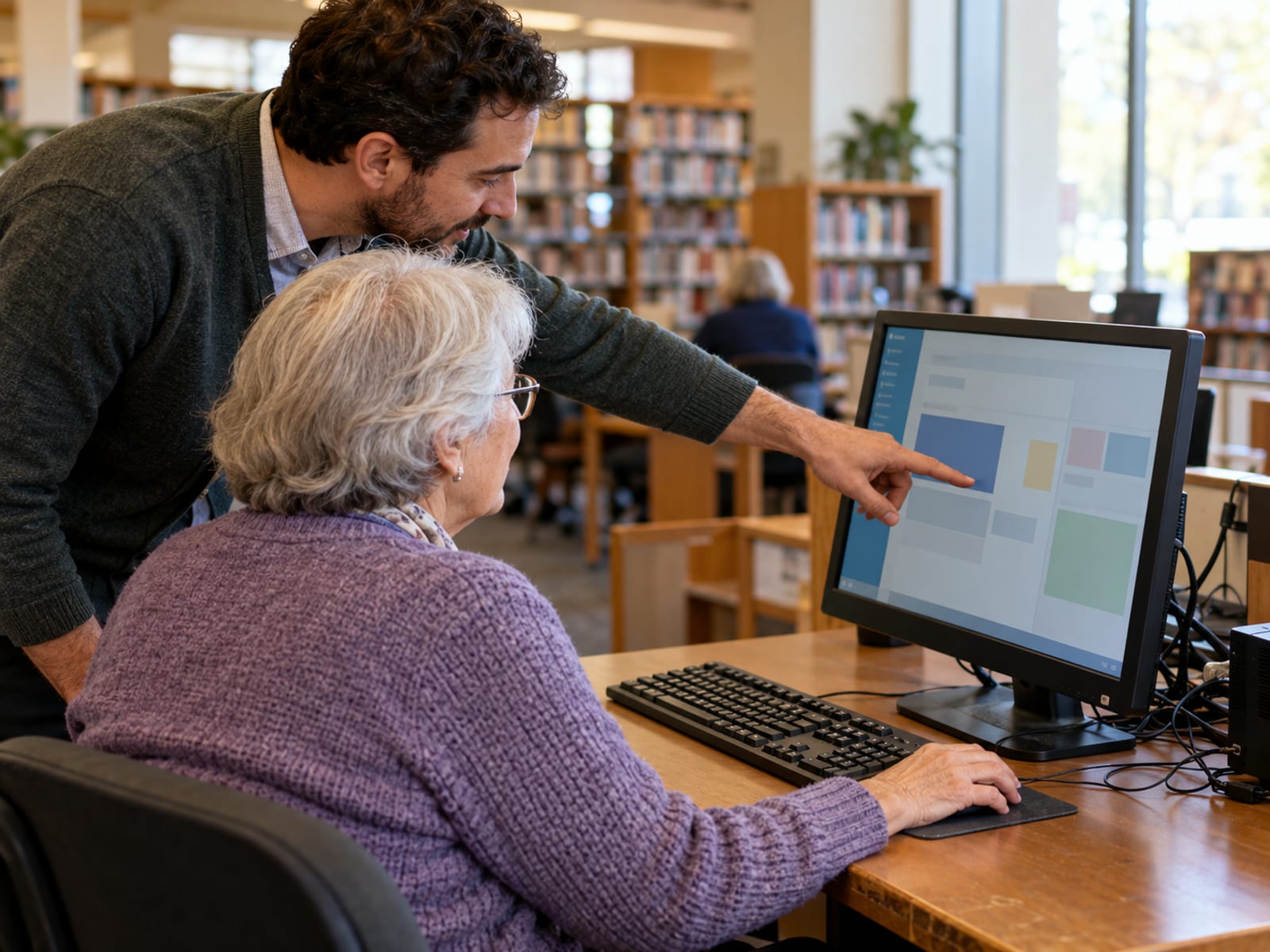
Knowing which reason is yours points to the fix. You can shrink the action until it is almost too easy, tie it to something that already happens, and leave the book or the shoes where you will see them. After a lapse, review the plan instead of treating the lapse as proof you failed. Rest, shrinking a goal and pausing for a season are all allowed.
A few helps that fit most weeks:
- Make the step smaller, such as one page instead of a chapter.
- Attach it to a moment that already happens, like the kettle boiling.
- Leave the next step where you can see it.
- Ask one person to check in with you on Sunday.
- Look at the plan after a missed week and change it.
1. You want to feel steadier giving updates at work. What tends to build that confidence?
2. Your week is packed and your plan keeps slipping. What is a good next move?
3. What can a new work skill honestly be expected to do?
4. Stress or low mood is getting in the way of everyday life. Who is a good person to ask?
When another kind of help fits better
Sometimes the thing in the way is bigger than a habit. If stress, low mood, worry or a hard relationship are getting in the way of everyday life, a doctor, counsellor or other health professional is the right person to ask. The NHS has a page on what counselling involves and how it works, if you would like to know what to expect.
For choices about a course, a skill or a change of job, a career adviser or mentor can help you sort out the options. A self-help routine is a good companion to that support, but it is not a substitute for care.
Questions people ask
These are the questions that come up most often, with short answers you can use right away.
Why is personal development important?
It is important because small, steady practice can make everyday life feel more manageable. Over time, many people find clearer priorities, more confidence in particular skills and easier conversations at home. How much you gain depends on what you practice and the life around you.
What are some examples of personal development?
Three everyday ones are pausing before replying in a family disagreement, taking one free lesson on a break, and reviewing one recurring expense. Each is small enough to finish in a day. Pick the one closest to something already on your mind.
What are the main areas of personal development?
Common areas include habits and health, learning and skills, relationships and communication, work, money, and inner life such as values and stress. Different sources group them differently, so there is no single correct list. Choose the area that matters most this month.
What are some personal development activities?
Activities can be very small, and these take little time or money:
- A ten-minute lesson on your break
- A weekly check-in with a friend
- One line about what went well today
- Asking a colleague for feedback on one task
- Reviewing one subscription
What are the benefits of personal development at work?
Building skills can make you more capable and more adaptable, and it can make new tools or changes feel less daunting. A raise or promotion is not guaranteed, and support from your employer and your workload shape what is possible. Many people find it helpful to ask for one specific practice opportunity.
How can I improve my personal development?
Choose one goal, write down a first step with a day and time, and set a review date a week or two away. Then decide whether to keep, shrink, change or pause it. Small and specific beats big and vague.
Your first step this week
Pick one area from above: a skill, a conversation, a habit or a work task. Write the first step with a day and time, for example "a ten-minute lesson on Tuesday during my break" or "a pause before replying at dinner." On a five-minute day, the step might be a single sentence in a notebook. If money is tight, make it free: a library book, a practice run out loud, a walk and a thought. At the end of the week, decide whether to keep it, shrink it, change it or pause it.
Pick one thing that matters
Name a skill, conversation, habit or work task.
Choose a first step small enough to finish
Ten minutes or less.
Give it a day and time
Tie it to something already in your week.
Do it once and write one line
Note what you did and how it went.
Review at week's end
Keep it, shrink it, change it or pause it.
Motivation Facts has more guides in the Personal Growth section, and if a question is still open after this week, the contact page is the place to send it. For now, choose your one small step, put it on the calendar and let the rest of the week be the rest of the week.
Personal development. Choosing to build skills, habits or understanding that matter to your life, in steps that fit your week.
Self-efficacy. The belief that you can do one particular task, which tends to grow from doing it.
Mastery experience. A time you tried a task and got through it, which becomes evidence for the next try.
Habit cue. A moment or object that reminds you to start, like the kettle boiling.
Self-monitoring. A light way of tracking what you did, such as a tick on a calendar.
Adaptability. Being able to adjust when tools, tasks or plans change.
Review date. A day you set ahead of time to decide whether to keep, shrink, change or pause a step.