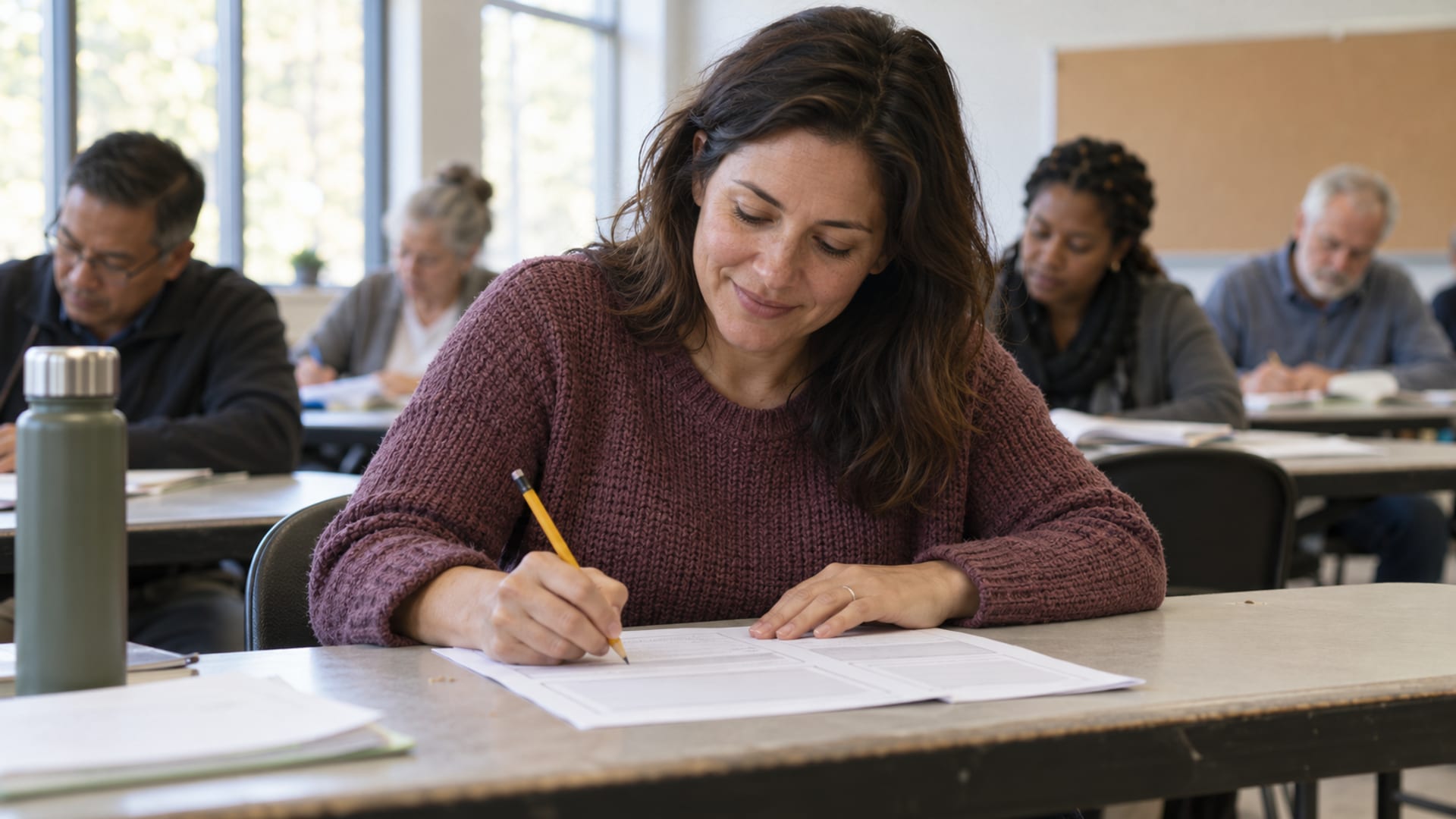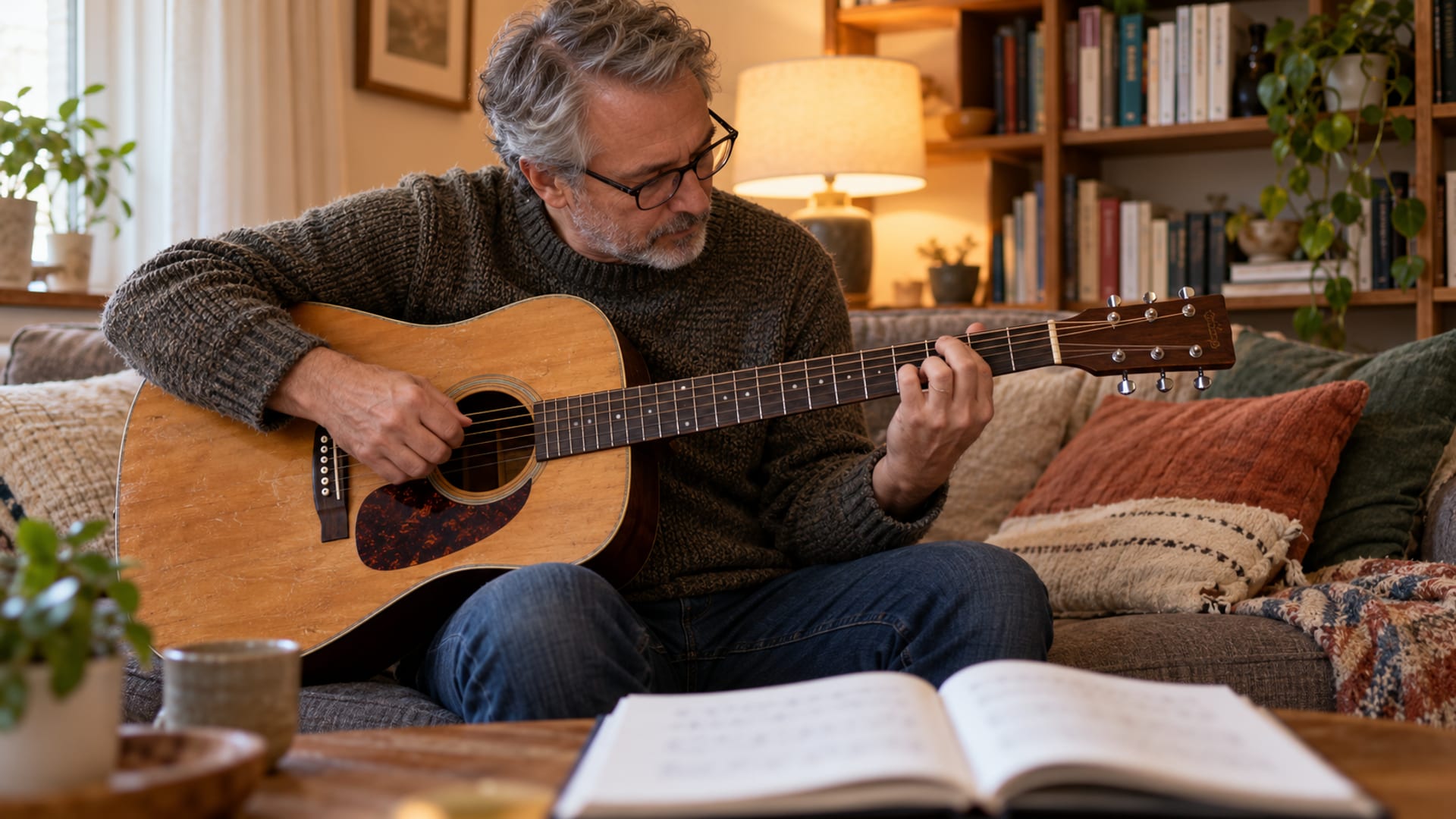
The guitar has been leaning in the corner for months, or the language app has not been opened in three weeks. You can start without clearing your schedule. Pick one skill, name one small first result you could reach in a few weeks, and practice in short sessions on a few different days instead of one long block.
For cooking, "make three simple dinners" is a clearer target than "learn to cook." For a work tool, it might be "build a monthly summary in a spreadsheet."
Below you will find a way to start, a week of short practice sessions, an honest answer on how long it takes, what to do when it feels slow, and free or low-cost places to learn. Adults can keep learning at any age.
- Pick one skill Name one small first result you could reach in a few weeks.
- Break it into parts Practice one part at a time.
- Short sessions, several days Three short sessions beat one long one.
- Try from memory, then check Then ask for one specific comment.
- Expect uneven progress Slow weeks are common; shrink the next step rather than quit.
Start with one skill and one small result
Many adults carry a list of things they would like to learn. The list is fine to keep, but one item gets your attention at a time. A simple test for choosing: which skill would make your next month a little easier or a little more enjoyable?
If you are not sure what an adult "should" know, everyday skills are a calm place to begin: cooking a few basic meals, handling money day to day, first aid, using the common tools at your job, and saying what you mean clearly. None of them is required, and the best one to start with is the one your next month needs.
Once you have the skill, say what you want to be able to do by a date a few weeks away. Good first results sound like this: prepare three simple dinners, play one song with three chords, write a monthly summary in a spreadsheet, or hold a five-minute conversation in Spanish. If a first session keeps getting put off, a few ideas for how to stop procrastinating can help you get that first session on the calendar.
The same steps work when you want to get better at something you already do. If you cook a little and want to cook with more confidence, or you write emails and want them to be clearer, pick one small improvement and treat it like a new skill.
Break it into small parts
A skill feels huge when you look at all of it at once. Cut it into parts and practice one at a time, at a level that is a little hard but not overwhelming.
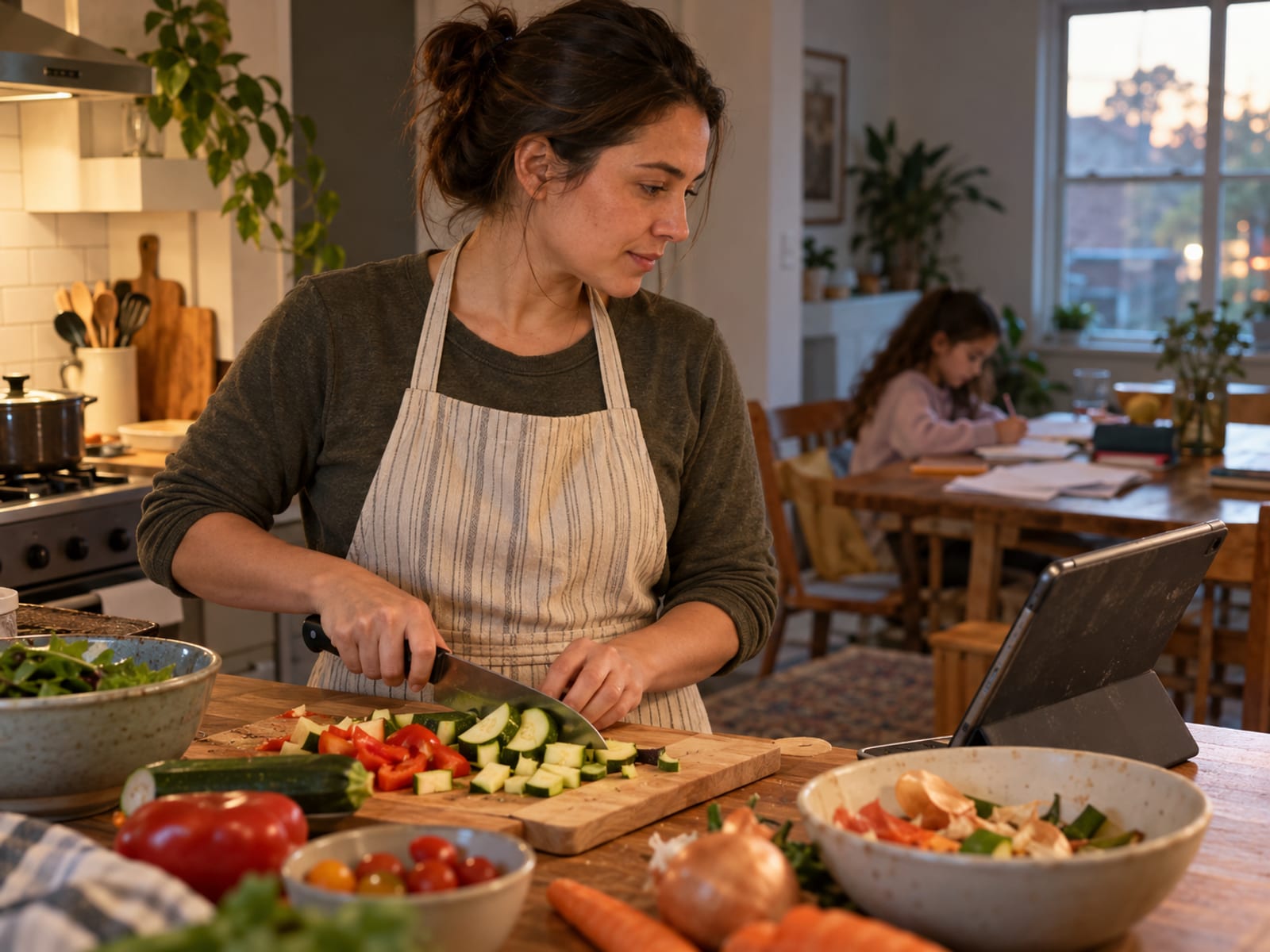
Cooking breaks into a handful of parts:
- Knife safety
- Reading a recipe
- Measuring
- Heat and timing
Guitar can start with one chord change. A spreadsheet tool can start with one task, such as adding up a column. If a part feels easy, move to the next one; if it feels like too much, make it smaller.
A week of short sessions
Three 20-minute sessions are easier to protect than one long weekend block. A short session fits between dinner and bedtime, on a break, or after the kids are asleep. If a week is packed, even a ten-minute session counts.
Learning experts at Carnegie Mellon say that practicing a little over several days helps people remember more than practicing everything at once. So, a plan with a few small sessions is not a compromise; it works well.
Here is how it can look. Say a parent with two busy evenings chooses basic cooking.
Tuesday
15 minutes of safe chopping, one onion and one carrot.
Thursday
One simple soup, using the written recipe.
Saturday
The same soup, with fewer looks at the recipe, then one comment from a housemate.
Next week
The same method with different vegetables.
You can shape the week to fit your life. On a five-minute day, do one chord change or recall five vocabulary words from memory. With a free afternoon, practice for longer and then try the whole thing once without the instructions. With no money, use library books and free classes, borrow equipment, or practice a spreadsheet task on a copy of data that is not sensitive. If you want help making the sessions stick, building a habit is a good next read.
Try it from memory, then check
Before you look at the chord chart or the recipe, try to play it, say it, or cook it first. Then check the instructions and fix what you missed. Carnegie Mellon's teaching center explains that trying to recall something before you look it up helps it stick better than rereading.
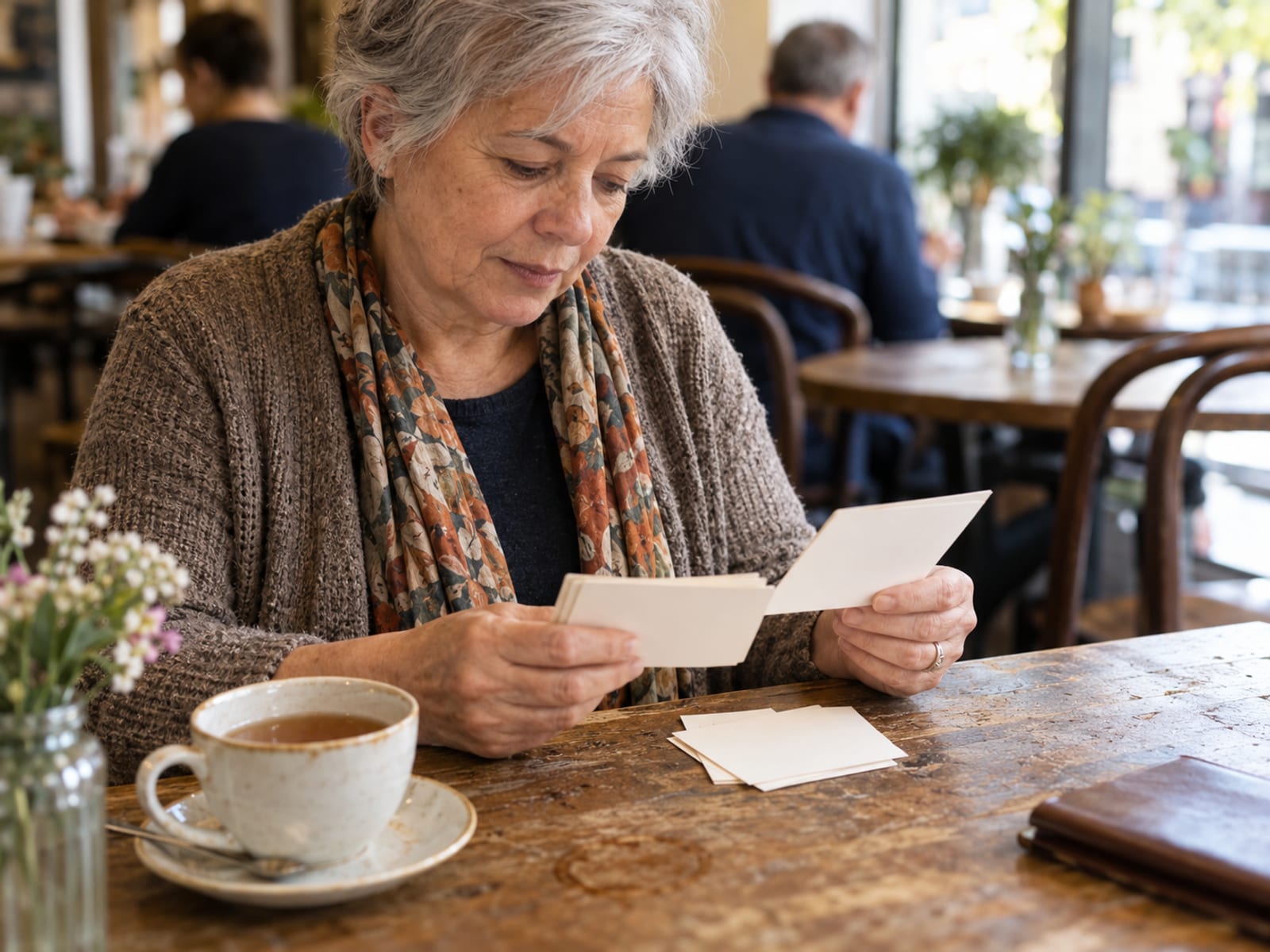
Asking one person for one specific comment helps too. Try something like: "Could you tell me one thing to change next time?" One suggestion is easier to use than a long list of corrections.
Sleep also matters. Harvard Health explains that sleep helps the brain store memories and skills such as playing an instrument, so a regular bedtime after a practice session is part of the plan.
| Practice choice | What to try | Why it helps |
|---|---|---|
| Practice choiceSpaced practice | What to tryCome back to the skill on several days of the week | Why it helpsSmaller sessions spread out are easier to remember and easier to fit in |
| Practice choiceTrying from memory | What to tryPlay, say or cook it first, then check the instructions | Why it helpsPulling it from memory helps it stick better than rereading |
| Practice choiceGetting feedback | What to tryAsk one person, "What is one thing to change next?" | Why it helpsA single clear comment is easy to act on |
| Practice choiceSleep | What to tryKeep a regular bedtime after you practice | Why it helpsSleep helps the brain store what you practiced |
| Practice choiceA small next step | What to tryChoose one part for the next session | Why it helpsA small goal is easier to start and finish |
How long it takes, honestly
There is no standard number of hours. "Learned" can mean recognizing the basics, finishing a beginner task on your own, or doing it reliably, and each takes a different amount of practice. It also depends on where you start, how often you practice, and what you want to be able to do.
You may have heard two numbers. The 10,000-hour figure was an average reported for a group of highly accomplished musicians, so it describes years of work at a very high level, not a rule for everyone. The 20-hour idea comes from a popular book and means about 20 focused hours to get noticeably better at the basics of a chosen skill. Neither is a rule for every person or every skill.
A more useful way to plan: choose a first usable result, pick a schedule that fits your week, and check in after a few sessions. If you can do something now that you could not do before, you are moving.
1. Which first goal is clearest?
2. What is easier for a busy parent to keep up?
3. Before you look at the recipe or chord chart, what can you do?
4. It is a very low-energy week. What fits?
When it feels slow, or you feel silly
Progress is often uneven. You may improve quickly at first, then hit a stretch where little seems to change. Mistakes also become easier to spot as you learn, which can feel like going backward when it is actually a sign you are noticing more.
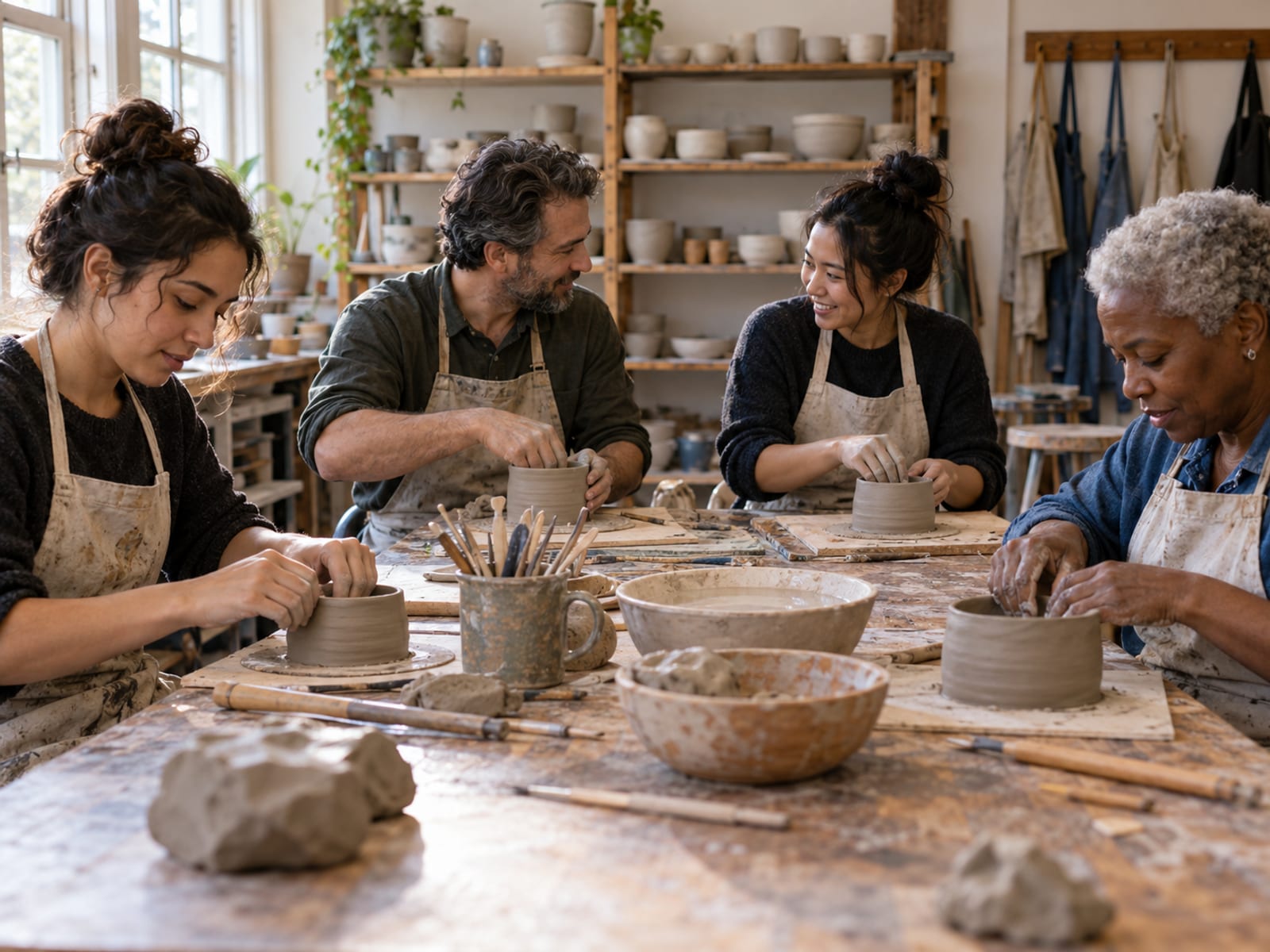
A few things can make it feel slower than it is: practicing too many parts at once, comparing your first attempts with an expert's polished result, or being tired. If it feels like too much, shrink the next task to one part. Practice alone or with other beginners if you worry about looking silly, and ask for one correction at a time. If the fear of making mistakes in front of people is the main thing in the way, building self-confidence may help.
It also helps to count what you can do now that you could not do before. "I can play the chord change twice in a row, which I could not do last week" is real progress.
For a low-energy week, try a maintenance session. Review your notes, recall the steps from memory, or do one tiny part. Then go back to fuller practice when you have more energy. It is also fine to change the skill or decide not to continue.
If you are asking why you are having trouble learning new things, tiredness, a packed schedule and too big a first step are common reasons, and all of them can be fixed. If your memory, concentration, sleep, hearing or vision seem to be getting worse and are getting in the way of daily life, it is worth talking with a doctor.
Free and low-cost places to learn, at any age
You do not need to spend much to learn. A public library is often the best place to start. Many offer books, language groups and conversation circles, tutoring, and free online classes, and some ask for a library card. The Free Library of Philadelphia is one example of what a library can offer adults.
Beyond the library, community centers and adult education classes, free online courses, clubs and maker spaces, and training through an employer or union are all worth a look. The table below shows what each is good for.
| Option | Good for | Worth knowing |
|---|---|---|
| OptionPublic library | Good forBooks, language groups, tutoring, free online classes | Worth knowingA library card may be needed |
| OptionCommunity or adult-education class | Good forStructure and a teacher | Worth knowingMany are low cost |
| OptionFree online course | Good forExplanations and demonstrations | Worth knowingYou still need to practice and check yourself |
| OptionPractice partner or club | Good forConversation, company, shared equipment | Worth knowingA friend may not catch technical mistakes |
| OptionWorkplace or union course | Good forSkills linked to your job | Worth knowingDepends on your employer or union |
When accuracy or safety matters, such as with tools or equipment, a qualified teacher is worth finding.
If you are older and wondering whether it is too late, the National Institute on Aging says that older adults may take longer to learn or recall some things but can still learn new skills. Give yourself extra time and keep sessions short. Learning something you enjoy is worthwhile on its own, and it does not need to be treated as a plan to protect your brain.
Questions people ask
How do adults learn new skills?
Most adults learn best by choosing one small result, practicing one part at a time, and returning on different days. Trying the skill from memory before checking the instructions, then asking for one comment, adds to that. A little each week usually beats a big push once in a while.
What is the fastest way to learn a new skill?
There is no guaranteed shortcut, but a few habits help. Pick one small result, practice in short sessions on different days, try it from memory before you check, and ask someone for one comment. Rest and sleep matter as well, so a steady pace tends to serve you better than cramming.
How long does it usually take to learn a new skill?
It depends on the skill, where you start and what "learned" means to you. The 10,000-hour number was an average for highly accomplished musicians, and the 20-hour idea means about 20 focused hours to get better at the basics. Neither applies to everyone, so choose a first result and check in after a few sessions.
At what age is it hard to learn?
Adults can keep learning at any age. Some things may take longer as we get older, but new skills are still within reach. Choose a pace that works for you and allow extra time.
What skills should every adult know?
There is no single list, but everyday skills such as cooking basic meals, handling money, first aid, using common tools at work and communicating clearly are a good place to look. In Spanish, people often call these "habilidades para la vida." Start with the one that would make your next month easier, then learn it the way described above.
Why am I having trouble learning new things?
Tiredness, a full schedule, practicing too many parts at once and a first step that is too large are common reasons. Shrink the task, shorten the session, and give yourself rest. If your memory, concentration, sleep, hearing or vision seem to be getting worse and are getting in the way of daily life, talk with a doctor.
Your next step this week
Choose one skill and write its first small result in a sentence. Then put two or three short sessions, even ten minutes each, on days that already have a gap. After the first session, try the next one from memory before you look at the instructions, and pick a date a few weeks away to look back and decide whether to keep going, change the plan or choose a different skill. Motivation Facts has more in the Personal Growth section, and you can reach us on the contact page if there is a topic you would like to see.
First useful result. A small, specific thing you want to be able to do, such as making three simple dinners.
Spaced practice. Practicing a little on several days instead of all at once.
Trying from memory. Playing, saying or cooking something before you look at the instructions, then checking.
Feedback. A specific comment on what to change next.
Plateau. A stretch where progress seems slow or stuck.
Practice partner. A friend or fellow beginner you practice with.
Maintenance session. A very short session, such as reviewing notes, to keep the skill alive in a low-energy week.