
It is Monday evening, and you realize the walk you started two weeks ago quietly ended last Thursday. Nothing dramatic happened. It just stopped. The whole method fits in two sentences: pick something so small it feels almost silly, and tie it to something you already do. For example, "After I pour my morning coffee, I will drink half a glass of water."
How long does it take? Weeks to months, with no magic number, so a slow start is normal.
Below you will find a low-willpower method, everyday examples, what to do after a missed day, small habits worth trying and a short note on letting go of one you do not want.
- Start tiny Choose a version so small it feels almost silly.
- Tie it to something you already do Use a cue like pouring coffee or brushing your teeth.
- Expect weeks or months There is no magic number of days, and a slow start is normal.
- After a miss, restart at the next cue Use the smallest version and change one thing.
- Try one habit at a time Add the next only once the first feels easy.
How long does a habit take?
Some habits settle in within a few weeks, and others take most of a season. In a well known study, adults who repeated one small daily action took anywhere from a few weeks to several months for it to feel automatic, with about two months as the average. So, if your habit still feels like effort after three weeks, that is ordinary, not a sign that something is wrong with you.
A simple action done in the same place tends to become automatic sooner than a big one. Drinking a glass of water after you start the coffee is easier to turn into a habit than going to the gym four times a week, because the gym habit has many moving parts: the bag, the travel, the time, the energy.
You may have heard that it takes 21 days. That number started as a surgeon's observation in a 1960 book about how his patients adjusted after operations. It was never a test of habits, and it is fine to let it go.
How a habit forms, in everyday terms
A habit is something you do with less thinking because the same moment keeps setting it off. You finish breakfast, and your hand reaches for the water glass. You open the laptop, and you check the same tabs. The moment that sets it off is the cue, and the cue does a lot of the work that willpower would otherwise have to do.

One handy way to think about it has four stages. There is a cue, then a bit of wanting to do the action, then the action itself, and then a small reward, such as a feeling of having finished something. This is a popular way to describe the process, not a law, but it helps you see which part to change when a habit is not sticking.
Motivation is useful for getting started. On a tired Thursday it is unreliable, which is why the setting matters more. One tool people use is a plain template, After I ..., I will ..., that links a tiny action to something already in your day.
A low-willpower method, step by step
Start by choosing one habit and the smallest useful version of it. If you want to read more, the smallest version is one page. If you want to walk more, it is five minutes, or even just putting your shoes on.
Next, attach it to something that already happens every day, like the coffee, the end of lunch or brushing your teeth. Then remove the setup friction: put the glass beside the coffee machine, the shoes by the door, the book on the pillow. Repeat it in a similar setting for a while, so the place and time start to prompt it for you.
Finally, mark that you did it, with a tick on a calendar or a note on your phone, and glance at the plan once a week. You are checking whether the cue is reliable and whether the action is realistic, not grading yourself.
| Habit | Smallest version | After I... | Make it easy |
|---|---|---|---|
| HabitDrink more water | Smallest versionHalf a glass | After I...After I start the coffee | Make it easyKeep a glass beside the machine |
| HabitWalk more | Smallest versionFive minutes | After I...After lunch | Make it easyLeave shoes by the door |
| HabitRead | Smallest versionOne page | After I...After brushing my teeth at night | Make it easyPut the book on the pillow |
| HabitEarlier bedtime | Smallest versionA five-minute wind-down | After I...After I set my evening alarm | Make it easyCharge the phone away from the bed |
| HabitStretch at work | Smallest versionOne minute | After I...After a video meeting ends | Make it easyPut a note beside the monitor |
The aim of week one is to practice the cue and the action, not to reach the final goal. A five-minute walk counts. If it still feels hard after a few tries, make it smaller or change the anchor, since a cue that does not happen reliably will never work, however good your intentions are.
Versions for a five-minute day, a free afternoon, and no money
The same habit can be shrunk or stretched to fit the day you actually have. These are options, not rules, so take what fits and leave the rest.

On a five-minute day, read one page of a book after brushing your teeth, or stretch for one minute after you close a video call. If you want a cue that starts the morning, the morning routine ideas are a good place to look for one.
With a free afternoon, you can make the habit easier for the whole week. Take a longer walk, fill the water bottle and set it by the door, put the book where you will see it, or clear the corner where the habit will happen. An hour of setup can save you a week of decisions.
With no money, a library book, a walk from your front door, tap water and a pencil tick on a calendar are all you need.
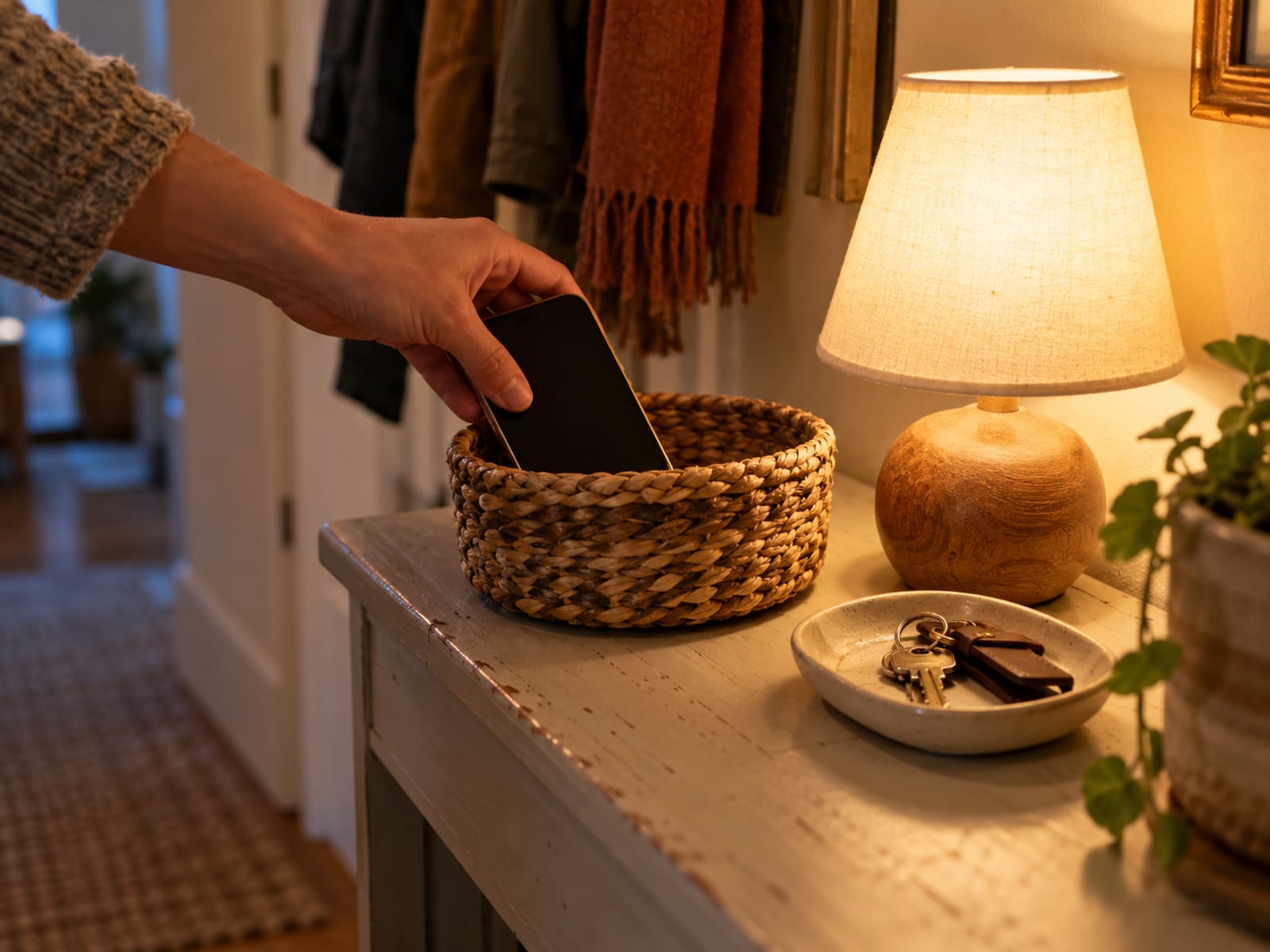
Real life adds its own shapes, and the idea bends to fit them. A shift worker can use the end of the shift as the cue, whatever hour that falls on. A parent can use a predictable moment, such as the start of dinner or bedtime, and keep the first version short enough for days when the routine changes. In a shared bedroom, agree on a spot for the phone together, so the plan works for both of you. On a low-energy day, step outside for one minute, or do some seated movement if walking is not accessible for you. If meetings vary all day, pick a reliable action, such as closing the laptop, as the cue.
1. Which plan is easiest to keep?
2. How long does a habit usually take to feel automatic?
3. You missed a day. What helps most?
4. The habit still feels too hard after a few tries. What now?
After you miss a day, or a week
If you miss a day, pick the habit up at the next cue. There is no make-up session and no need to start over on Monday. In that same study, people who missed a single day were not set back much.
After several days or a full week, start with the smallest version for the first few times. Then look for what actually got in the way: time, tiredness, a cue that was vague, or a step that was too big. Change one thing, such as moving the anchor to a more dependable moment or setting the habit up in a different spot. A restart is just another repetition.
You may have heard the idea of never missing twice. It is a handy prompt to try, nothing more, and it works best as a gentle nudge: if yesterday slipped, today is the day to do the tiny version.
A missed day tells you something about the plan, not about you. If you need a bit of extra push when your energy is low, how to stay motivated has ideas for those days. And if keeping to routines has been hard for months in a way that affects work, school, sleep or home, it is worth mentioning to a doctor or counselor, who can look at the bigger picture with you.
Next cue
Pick up at the next time the cue shows up, not next Monday.
Smallest version
Do the tiny version for the first few times.
Name the barrier
Time, tiredness, a vague cue or a step that was too big.
Change one thing
Move the anchor, the place or the setup.
Carry on
Count the restart as another repeat.
Small habits people try for wellbeing
If you came looking for a list of good habits, these are ideas to try one at a time, not a checklist to complete. Each one can be tiny, and each can change shape to fit your health, schedule, climate and neighborhood.
- Movement: walk to the end of the street and back, or stand up and stretch during a break; the CDC says adults can gain health benefits from sitting less and moving more.
- Steady sleep timing: pick a wake-up time you can keep most days, then let bedtime follow.
- Time outdoors: sit by a window or on a step for five minutes if a park is out of reach.
- Connection: text a friend on Sunday, or call someone while you cook; the WHO report on social connection treats close ties as part of wellbeing.
- Water: keep a glass where you can see it and drink when you are thirsty.
There is no fixed amount of water, number of steps or hours of sleep that suits everyone. Disability, illness, caregiving, shift work, safety and access to green space all change what is possible, and a smaller version that you can keep beats a bigger one you cannot.
Letting go of a habit you do not want
Breaking a habit is mostly the same idea turned around. Start by noticing the moment that usually comes before it: a place, a time of day, a person or a feeling. Then change or avoid that moment when you can. If the phone scroll starts in bed, charge the phone across the room. If the snack starts at the pantry, move it to a high shelf.
Adding a little friction helps, such as an extra step or putting the thing out of reach. A research review of habit change found that changing the setting, or adding a little friction, helps people shift a habit. Make the replacement easy and visible at the same time, so there is something else ready to do in that moment.
Old habits can come back when the old setting returns, such as a holiday, an old route or the same group of people. A slip then is normal, and the answer is the same as before: go back to the plan at the next cue.
For alcohol, tobacco, drugs, eating concerns, self-harm or heavy distress, tips like these are not enough. A doctor or counselor is the right call.
Questions people ask
Short answers to the questions that come up most often follow.
How long does it take to build a habit?
Usually weeks to months, and it varies a lot from person to person and from habit to habit. A small action in the same setting tends to feel automatic sooner than a big, many-part one.
Is 21 days really enough to form a habit?
Usually not, since it often takes longer. The 21 days idea comes from a surgeon's 1960 book, which described how patients adjusted after operations rather than how habits form.
What is the 333 rule for habits?
It is a popular idea with several versions, not a researched rule, so treat it as something to try rather than as science. The small-cue method works the same way: pick a tiny action, tie it to a cue and see how it goes.
What should I do if I miss a day?
Resume at the next cue, using the smallest version of the habit. You do not need to make up the missed day or start over.
What are some good habits to start with?
Choose one small action from the lists above, such as a glass of water after the coffee, one page of a book at night or a five-minute walk after lunch. Start with just one, and add another only when the first one feels easy.
How do I start a habit when I have no motivation?
Make it smaller and tie it to something you already do. When the action takes under two minutes and follows a moment that happens anyway, you do not need much motivation to begin.
One thing to try this week
Write one "After I ..., I will ..." sentence for a version that takes under two minutes, choose a cue that already happens every day, and do it for seven days. If you miss one, restart at the next cue with the smallest version. Motivation Facts has more guides in the Goals and Motivation section, the personal development plan can help you fit the habit into a wider plan, and the contact page is the place to send a topic you would like us to cover next.
Habit. Something you do with little thinking because the same moment keeps prompting it.
Cue (anchor). The moment that already happens in your day and sets the habit off, such as pouring coffee.
Smallest version. The tiniest form of the habit that still counts, like one page or one minute.
Friction. Anything that makes an action harder, such as an extra step or something out of reach.
Automatic. Done with little effort or decision-making because the cue has done the work.
Restart plan. What you will do at the next cue after a missed day or week.
Backup version. An even smaller version for days when time or energy is short.