


You want to message a friend and nothing comes to mind past "how are you." Three you can send as they are, one for each mood: "What song have you played more than once this week?" "What small thing made today better?" "What is a meal you would happily eat every week?"
Below, the questions are grouped by setting: a text, a meal or a walk, a road trip, a deeper chat and a catch-up with an old friend. You will also find a simple way to follow up on an answer, plus versions for a short day or a day with no money to spend.
- Match the setting Light questions for a text, a story question for a meal, a slower one for a catch-up.
- Follow the answer Ask about what your friend just said before moving to a new topic.
- Share too Answer your own question so it feels like a conversation, not an interview.
- Give an easy pass Let your friend skip a question or change the subject.
- Start small One question in a text counts.
Light questions for a text or a five-minute day
A text works best when it is easy to answer in one line and easy to stretch into a story. Six that do both: "What song have you played more than once this week?" "What is your ideal lazy-day meal?" "What small thing made today better?" "If you could instantly become good at one hobby, what would you choose?" "What fictional place would you visit for a weekend?" and "What is a strangely specific opinion you have?" That last one invites either a quick answer or a good story, and both are welcome.
You can also take the pressure off in the message itself. "No need to reply right away. What is one small win from your week?" works well when your friend is busy or in a different time zone, because it says the answer can wait. If the person is a coworker or someone you met recently, a light text like these is a gentle start, and making friends as an adult covers that first stretch in more detail.
On a low-energy day, try offering a choice: "Do you want a serious question, a silly question, or no questions and just company?" Any of the three answers is a good one, and your friend gets to decide what the day can hold.
Questions for a meal, a walk or a road trip
When you are sitting across from someone, food questions tend to open stories. Try "What food reminds you of home?" "What is a meal you would happily eat every week?" "What is the best meal you have had recently?" "What is something you used to dislike but now enjoy?" "What restaurant or café would you take a visitor to?" and "What is your favorite tradition, even a very small one?" They work just as well on a bench with a sandwich as they do at a restaurant.

A car gives you long stretches with nothing to look at, which suits playful questions. "What would be on your perfect three-song playlist?" "Which place would you revisit tomorrow?" "What is the funniest travel mistake you have made?" "Would you rather have unlimited flights or unlimited hotel stays?" "What would you do with an unexpected free weekend?" and "What topic could you talk about for an hour?" If you are the one driving, keep your attention on the road and save the longer answers for a stop.
You can also take turns: "Let's alternate. One ridiculous question, one real question, and either of us can pass." For a workplace friend, a short lunch walk and a question like "What part of your work has been most satisfying lately?" is an easy invitation.
Your friend can answer, redirect or ask you the same question back. The point is a shared conversation, not finishing a list.
Deeper questions that build closeness without prying
Start with values, preferences, memories and hopes before anything painful. Questions like "What kind of friendship makes you feel supported?" "What is something you have changed your mind about?" "When do you feel most like yourself?" and "What are you hoping to make more room for this year?" give your friend plenty of choice about how personal to get.
Others to borrow: "What is a lesson you learned later than you wish you had?" "What helps you feel cared for?" "What is something you are proud of that people may not notice?" "What is a memory that still makes you smile?" and "What would make an ordinary week feel meaningful to you?"
Pair these with an easy pass, in words: "You do not have to answer if you would rather not." Share your own answer too, but do not use it to push your friend to match you. A simple pace helps. Ask about something manageable, follow the answer instead of jumping to a new subject, share something of similar size, ask whether your friend wants to go deeper, and change topics when the energy drops.
That pacing has some backing. People tended to share more personal things as time went on and often matched each other's level, which is a good reason to take turns instead of quizzing. You may also have heard of the 36 questions, a set that starts light and becomes more personal. It was made to help strangers get close and is often used with friends too, so you can borrow a few at your friend's pace.
Catching up with an old friend
Begin with warmth and curiosity about the present, not a debt to repay. You might send something like: "I was thinking about you today and realized I miss catching up. How have you been? If you are open to it, I would love to hear what life has been like lately. No pressure if now is not a good time." Change the wording until it sounds like you.
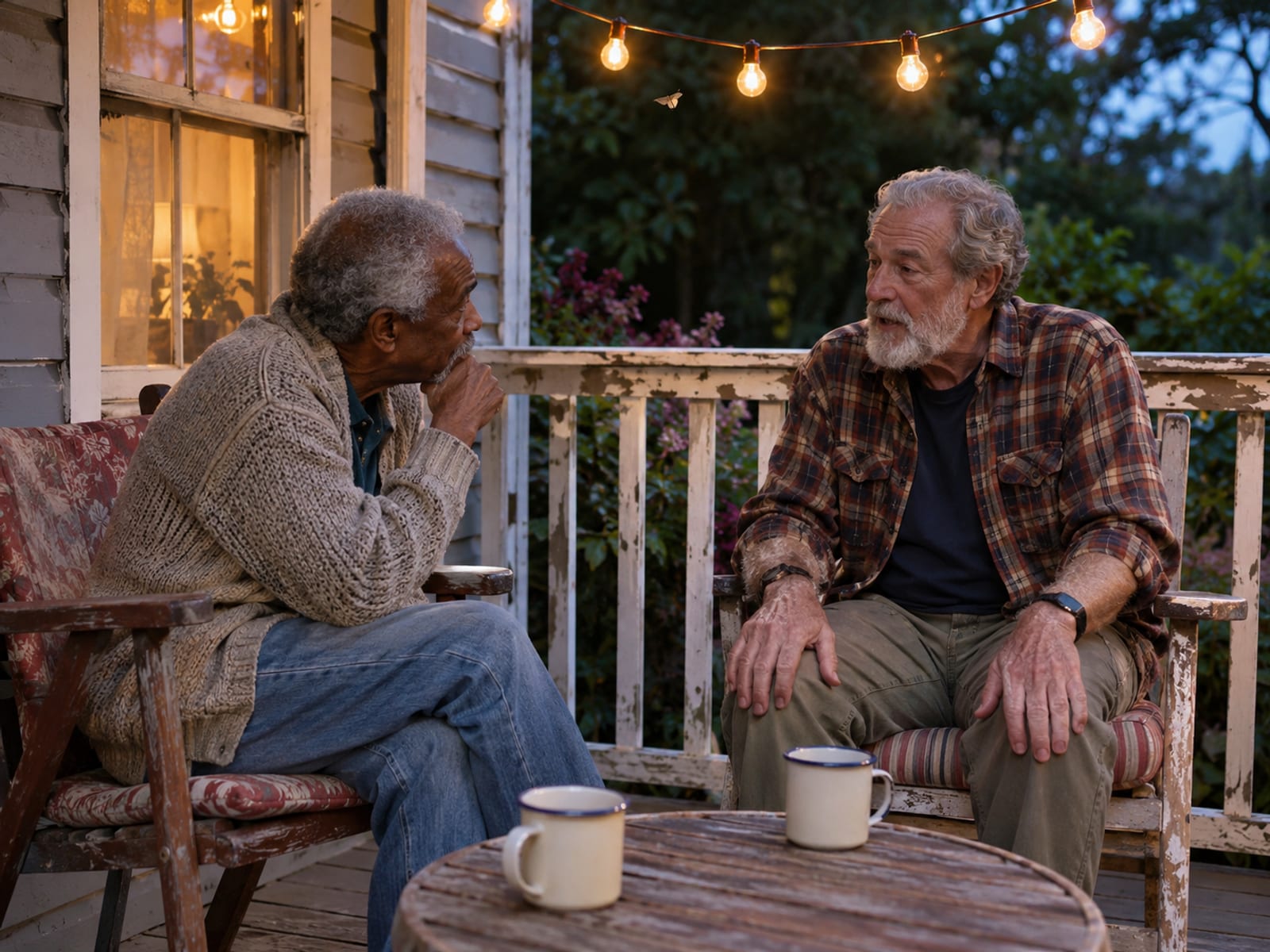
Once you are talking, a few questions fit well. "What has changed most in your life since we last talked?" "What have you been enjoying?" "What has been difficult or tiring?" "What memories from our friendship still stand out to you?" "What would staying in touch realistically look like now?" and "Would you rather start with a short call, a walk, or a few texts?" The last two let your friend set the pace, which matters when life has been busy on both sides.
If the silence involved hurt, one honest line can help: "I realize I went quiet, and I am sorry. I understand if you need time." Then respect a slow reply or a boundary. If the distance has left you feeling lonely, coping with loneliness has ideas for the days in between.
Asking so the conversation does not go flat
An open question starts with "what," "how" or "tell me about," and it cannot be answered with yes or no. "Did you have a good day?" gets a quick "yeah." "What was the best part of your day?" gets something to work with. After the answer, a good follow-up usually does one of four things. It clarifies: "When you say it was stressful, what part was hardest?" It invites detail: "What happened after that?" It reflects: "It sounds like you were excited and nervous at the same time." Or it connects: "You mentioned learning to cook. What got you started?"
People who asked more questions, especially follow-ups that built on what the other person had just said, were generally liked more by the people they talked with, though that was measured in short conversations. Treat it as a nudge to listen, and active listening goes further on that half of the skill.
Ask
Start with one open question about something that fits the moment.
Listen
Let the answer finish, including any pause.
React
Say what you heard or how it landed.
Share briefly
Add a short answer of your own.
Follow up
Ask one related question about what they said.
To keep it from feeling like an interview, a few habits help.
- Ask about what your friend has already mentioned.
- Let pauses happen.
- Answer your own question too.
- Follow an interesting detour.
- Skip correcting or fixing, and just listen.
This table gives a starting point for each setting, with a follow-up and a way to keep it easy.
| Setting | Start with | Follow-up | Keep it easy |
|---|---|---|---|
| SettingTexting | Start with"What made today better?" | Follow-up"What happened next?" | Keep it easyLet replies take time |
| SettingMeal | Start with"What food reminds you of home?" | Follow-up"Why does it matter to you?" | Keep it easyChange the topic if needed |
| SettingRoad trip | Start with"What would be on your playlist?" | Follow-up"What memory does that song bring back?" | Keep it easyKeep your attention on the road |
| SettingReconnecting | Start with"What has changed since we last talked?" | Follow-up"How has that been for you?" | Keep it easyDo not demand an explanation |
| SettingA heavier topic | Start with"Do you want to talk about it?" | Follow-up"Would listening or brainstorming help?" | Keep it easyRespect a "not now" |
Questions that let a friend tell you what they see in you
Sometimes you are curious how a friend sees you, and a few gentle questions can open that up, if your friend is willing. Try "What do you think I am good at that I might overlook?" "What would you want more of when we spend time together?" "What helps you feel cared for by me?" or "When do I seem most like myself?"

Say up front that your friend can pass, and that you would like an honest answer at their pace. What comes back is one person's view, not a verdict on you or on the friendship, so listen, say thank you and let it sit for a while.
Making it fit your week
These are options, not rules, and each one works with very little. On a five-minute day, a voice note every Friday with one thing that made you laugh is plenty: "Our calendars are packed, so how about one voice note every Friday with one thing that made us laugh?" For a free afternoon, a coffee or a walk where you each answer one fun question is enough.
With no money to spend, a walk, a phone call, a voice note or a bench all cost nothing. If you share a home and have only a short window, you could say, "The kids are asleep and we have 20 minutes. What has been on your mind lately?" For a friend in another time zone, the no-reply-needed message from earlier fits. For a workplace friend, the lunch walk does the job.
Comfort levels differ too, so you can let your friend choose: "Would you rather talk about plans, memories, hobbies, or something completely random?" It hands over the steering wheel without making a big deal of it.
1. Which of these is an open question?
2. A friend is giving short answers. What is a good move?
3. What does a good follow-up question build on?
4. How should a message to an old friend open?
When a topic feels too personal or the chat feels one-sided
If a topic feels like too much, for you or for your friend, say so kindly: "We can talk about something else." Giving each other a way to pass keeps the conversation friendly. You can also notice how it is going, without scoring anything. A conversation tends to feel mutual when:
- You both ask questions and you both answer them.
- Answers sometimes run longer than a word or two.
- Pauses feel comfortable, not tense.
- Each of you can change the subject.
- Neither of you is steering the whole time.
If a friendship keeps feeling one-sided, what to do about a one-sided friendship takes that up. And if you want to comfort a friend who is having a hard day, what to say to a friend has words to try.
A knot that keeps coming back between friends can be talked through with a counselor, and friends sometimes seek counseling together for conflict, a big life change or a friendship that has broken down. If there is fear, threats or being controlled, safety comes before any deeper conversation, and a trusted person or a local support service is the place to turn.
Questions people ask
These are the questions that come up most often when someone is looking for things to ask a friend.
What are some good questions to ask a friend?
Good questions are easy to answer and easy to build on, such as "What small thing made today better?" or "What is a meal you would happily eat every week?" The sections above group dozens of them by setting so you can pick by mood. Choose one that fits the moment and let the answer lead to the next one.
What are some funny questions to ask a friend?
Playful questions work best when they are a little silly and easy to answer. Try "Would you rather have unlimited flights or unlimited hotel stays?" "What is the funniest travel mistake you have made?" "What is a strangely specific opinion you have?" or "What fictional place would you visit for a weekend?" Add your own answer and you have a game, not a quiz.
What are some deep questions to ask a friend?
Deeper questions start with values and memories, such as "When do you feel most like yourself?" "What helps you feel cared for?" "What is a memory that still makes you smile?" "What is something you have changed your mind about?" and "What would make an ordinary week feel meaningful to you?" Follow each with "You do not have to answer if you would rather not."
What are the 36 questions to ask?
They are a set of questions that start light and become more personal, made to help people get close, and often used with friends too. In the original version, strangers who took turns answering questions that grew gradually more personal felt closer afterward than pairs given small-talk questions, though that was in a short, structured setting. You do not need all 36; a few, at your friend's pace, is plenty.
How can I ask better questions?
Ask about something your friend has already said, then listen to the whole answer before you reply. Share something of your own so it feels like a conversation, and let a pause be a pause. One related follow-up usually beats three new questions.
What are open questions?
An open question is one that cannot be answered with yes or no, and it usually starts with "what" or "how." "Did you like the trip?" is closed, while "What was the best part of the trip?" is open. They give your friend room to tell you as much or as little as they like.
One thing to try this week
Pick one question from the sets above and send it to a friend as a text, or ask it at your next meal or walk. Listen to the answer, ask one follow-up about it and share a short answer of your own. If a friend has gone quiet, send the short catch-up message instead. You will find more guides on relationships on Motivation Facts, and if you have a question or an idea for a guide, send it through the contact page.
Open question. A question that starts with "what" or "how" and cannot be answered with yes or no.
Follow-up question. A question that builds on something your friend just said.
Small talk. Light, everyday conversation, such as the weather or plans for the weekend.
Icebreaker. A simple question or comment that gets a conversation started.
Pass. Letting a friend skip a question or change the subject without explaining.
Pacing. Moving from light topics to more personal ones slowly, at a speed both people are comfortable with.
Check-in message. A short, low-pressure text that says you are thinking of someone and need no reply.