

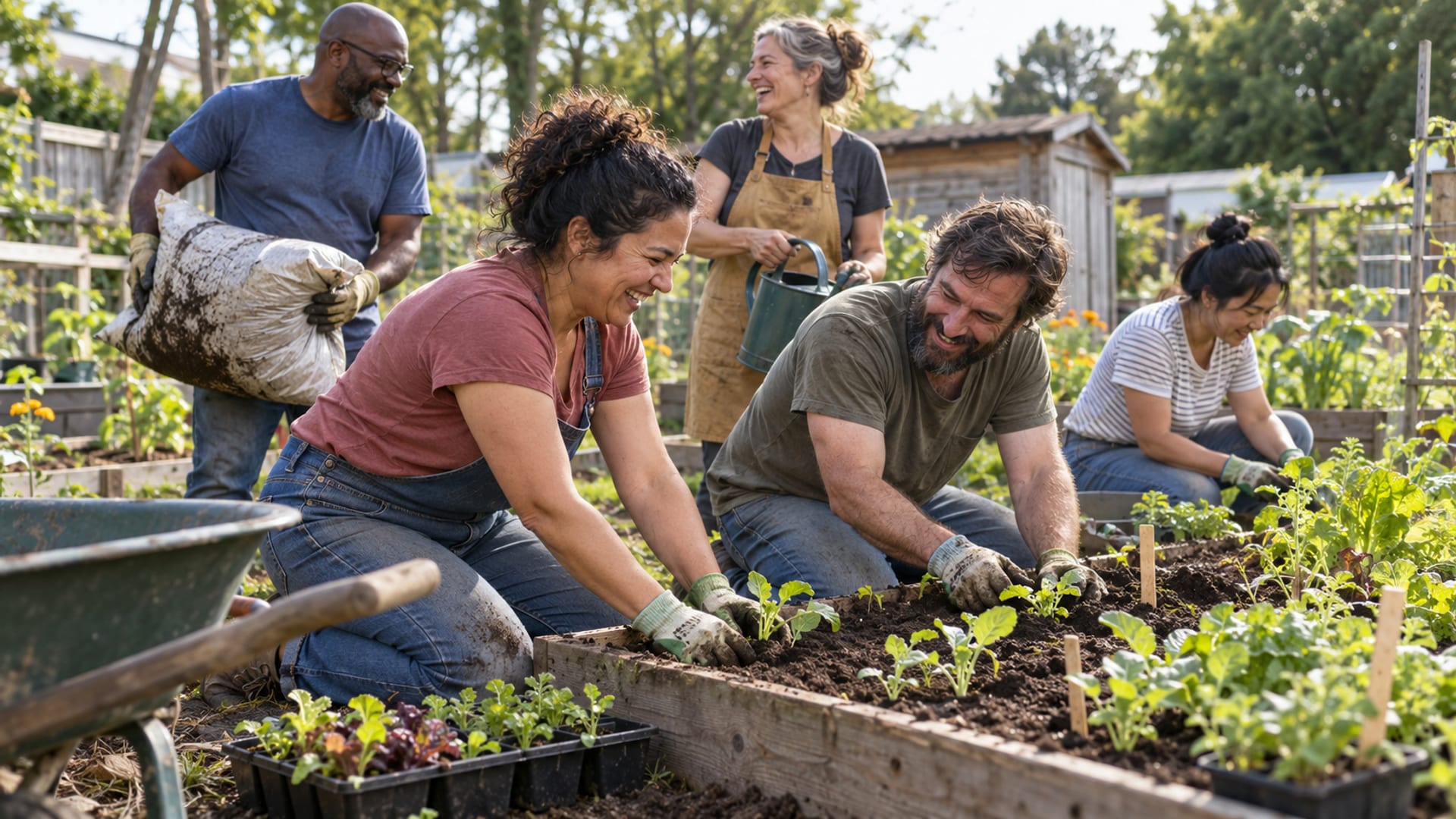
It's Saturday morning, you scroll through your contacts, and you realize you wouldn't know who to text. That moment is common, and it has a plain fix. Three things tend to work: pick one place you can return to every week, learn one name there, and offer one small invitation that is easy to say no to.
You can say something as simple as, "I'm going to the library event on Thursday. Want to come along?" It's short, it's specific, and either answer is fine.
Below you'll find where adults actually meet people, how to turn a hello into a plan, what to say, how long it honestly takes, what to do with shyness or a no, and ideas for a move, a new baby, retirement, remote work or a breakup.
- Pick one place Choose a class, club, shift or walking group you can return to every week.
- Say hello twice Talk briefly more than once and learn one name.
- Keep the first ask small Offer a short, specific plan that is easy to say no to.
- Give it time Friendships build through repeated contact, so slow at first is normal.
- A no is not a verdict Reply kindly and keep showing up.
Why it feels harder now, and where to start
At school and in early jobs, the same people showed up in the same room day after day, and friendship grew out of that without much effort. Adult life rarely hands you that. Work, family and errands fill the week, and the people you see are often different each time, so friendship now usually needs a place you choose and return to.
If that has felt hard, it says nothing about whether you're easy to like. Loneliness is widespread and not a personal flaw, and the CDC describes it as a gap between the connection you want and the connection you feel you have. Moves, job changes, new babies and breakups can all widen that gap without anyone doing anything wrong.
The starting move is small. Pick one recurring thing that fits your week and your budget, whether that's a Tuesday class, a Saturday walking group or a monthly volunteer shift, and plan to go more than once. Seeing the same faces is what turns a stranger into someone you know.
Where adults actually meet people
The best places share one feature: they bring you back to the same people again and again. Classes and clubs do that, and so do volunteer shifts, faith or community groups, sports and walking groups, your workplace, your street, and the parent routines around school and playgrounds. Pick the one that matches something you already enjoy, because you'll go back more easily to a place you like.

Friend-finding apps are another route. They connect people who say they want new friends or share an interest, and some organize group events. They can't promise compatibility, safety or a lasting friendship, so read the safety rules, meet in a public place and let things move slowly.
| Setting | Examples | A low-pressure first step |
|---|---|---|
| SettingClasses | ExamplesLanguage, cooking, art, dance, coding, music | A low-pressure first stepArrive a few minutes early and ask someone about the class |
| SettingClubs | ExamplesBook clubs, gardening groups, board games, photography | A low-pressure first stepGo more than once before deciding whether it fits |
| SettingVolunteering | ExamplesFood banks, animal shelters, libraries, community events | A low-pressure first stepChoose a regular shift if you can |
| SettingFaith or community groups | ExamplesCongregations, cultural associations, neighborhood centers | A low-pressure first stepJoin a small group or a service activity |
| SettingSports and walking groups | ExamplesWalking groups, recreational leagues, climbing, swimming | A low-pressure first stepAsk about the next session or a beginner level |
| SettingWork | ExamplesLunch groups, interest groups, professional communities | A low-pressure first stepSuggest a short coffee or lunch outside the task at hand |
| SettingNeighbors | ExamplesBuilding events, local cleanups, dog-walking routes | A low-pressure first stepSay hello and ask a practical question about the street |
| SettingParent groups | ExamplesSchool activities, playground routines, childcare swaps | A low-pressure first stepSuggest a short, child-friendly meet-up |
| SettingFriend-finding apps | ExamplesPlatforms built around friendship, shared interests, groups or events | A low-pressure first stepRead the safety rules, pick a public place and go slowly |
Your week might not look like anyone else's, so think of these as choices by the kind of day you have. On a five-minute day, say hello to a neighbor and ask one practical question about the street, like when the recycling goes out. With a free afternoon, try a library event, a park group or a community cleanup. If money is tight, the library, local parks, free community events and volunteering cost nothing and still put you around the same people more than once.
From a hello to a second conversation
Most friendships start with something small and shared: the same class, the same shift, the same bench at the playground. Notice what you have in common, then talk briefly each time you see the person. A few minutes counts. The aim is for them to recognize you and for you to recognize them.
Easy openers work best. You might say, "Have you been to these before?" or "How long have you been coming to this group?" The next time you see them, ask one follow-up about something they mentioned, like "You said your garden was recovering. How is it doing?" Learn their name and use it. People remember being remembered.
Notice a shared interest
A class, a routine or a neighborhood gives you something to talk about.
Talk briefly more than once
A few minutes each time adds up.
Ask a follow-up
Bring up something they mentioned last time.
Make a small invitation
Offer something short, specific and easy to decline.
Follow up
Send a quick note afterward or mention it next time.
Notice if it goes both ways
See whether they reach out and reply, too.
The small invitation, word for word
At some point a friendly hello needs to become a plan, and that's usually the step people put off. Keep the first invitation short, specific and easy to turn down: a 20-minute coffee, a lunch, a walk, or going back to the same activity together. Offering two possible times makes it simple to answer. If you don't hear back, a single friendly follow-up is plenty.

You can borrow any of these lines and change the details:
- "I've enjoyed talking with you before class. Would you like to get coffee for 20 minutes afterward next week?"
- "You mentioned liking science fiction. I'm going to the library event on Thursday. Would you like to join me?"
- "I'm trying the Saturday walking group again. Want to meet at the entrance?"
- "I'm free Tuesday or Thursday after work. Would either day suit you?"
- "It was good talking today. Here's my number if you'd like to continue the conversation sometime."
One invitation doesn't create a friendship, and it doesn't need to. What matters more is a pattern where both of you reach out, a second meeting somewhere new, like moving from class to coffee or from work to lunch, and a quick "Thanks for coming along, I enjoyed it" afterward. A good chat is nice. Steady contact from both sides is what lasts.
How long it takes, honestly
If you're hoping this can be fast and easy, here's the honest answer: you can start fast, because a few small steps in the first week are very doable, but friendship itself builds through repeated time together. That means it usually feels slow before it feels easy, and that's normal.
One often-quoted estimate comes from a 2018 study of recent movers and first-year college students. It puts roughly 40 to 60 hours together as the point where an acquaintance becomes a casual friend, 80 to 100 hours for a friend, and more than 200 for a close friend, as summarized by the University of Kansas. Treat those as a rough guide, not a deadline, and never as a way to judge yourself or anyone else.
What the hours really say is that time counts. A weekly class or a regular shift quietly adds them up, one ordinary afternoon at a time.
Shyness, awkward moments and a no
Awkward is what happens when two people don't know each other yet. It fades with repetition. If nerves are loud, the NHS suggests going to the first session just to watch, then setting a small target for the next one, like learning one person's name. Keep the first meeting short, and choose a public place when you're meeting someone new. If you'd like help with the nerves themselves, building self-confidence is a good next read.

A no is usually about the other person's week. They may be busy, short on time, happier in a different setting, or not looking for new friends right now. It tells you something about that invitation, not about you. You can answer with "No problem. If another time works, feel free to let me know," or "Totally understood. I'll see you at the next session," or "Thanks for letting me know. I hope your week goes well." Then keep showing up.
If someone never makes plans or never reaches back, put your energy into other people. Plenty of others at the same place are glad to talk.
If loneliness doesn't lift, or comes with low mood or worry that gets in the way of daily life, it's worth talking to a doctor or a counselor, who can help you find the right support.
1. Which first invitation is easiest for someone to say yes to?
2. A person says no to your invitation. What does it most likely mean?
3. What is a better way to pick a place to meet people?
4. How should you read the hours it takes to make a friend?
Your situation: a move, a baby, retirement, remote work, a breakup
After a move, start with one recurring place near home and go several times. Ask neighbors and coworkers about local groups, since people often know the best ones. Keep an old friendship going by phone while the new ones build, so you have a steady person to talk to in the meantime. On a small day, just learn one neighbor's name.
As a new parent, lean on routines you already have: the same park, the library story time, the school pickup line. A child-friendly invitation fits a changing schedule: "We're usually at the park Saturday morning. Want to join us for 30 minutes?" Keeping your phone away at the meetup makes it easier to chat with the other adults.
After retirement, replace some of the old work routine with something weekly, such as a volunteer shift, a walking group, an adult education class, a community center activity, or lunch with a former coworker. If fees or transport are in the way, free and nearby options like a library program or a neighborhood walk work just as well.
Working from home means contact has to be planned, since nobody bumps into you in a hallway. Try a weekly class, a coworking morning, or a short coffee with a local colleague. A live interest group online can be a bridge, and meeting in person, in a public place, is a good next step when it feels right.
After a breakup, start with group activities instead of asking one person to fill the gap. Aim for regular contact and comfort rather than a replacement for what you lost. A weekly club or class gives you company without pressure.
Being the friend people want to see again
Once you have a few people in your circle, small habits keep it going. Show up when you said you would. Reply to messages, even briefly. Remember something the other person told you and ask about it next time. Suggest the next plan some of the time and let them suggest it other times, and keep the mood of a new friendship light.
What matters most is that both people reach out. A friendship where one person does all the planning tends to wear thin, and one where both people take turns tends to last. Returning to the same place every week is part of that, and a steady routine, like the one in how to build a habit, makes showing up feel ordinary instead of like a big effort.
Questions people ask
These are the questions that come up most when adults want new friends.
How do adults realistically make friends?
Pick one place you can return to, talk a little each time you're there, and then offer one small invitation. A class, a club or a volunteer shift all work, as long as you see the same people more than once.
Why is it so hard to make friends as an adult?
Adults have fewer automatic chances to see the same people, and busy weeks leave little room for extra plans. It says nothing bad about you. It mostly means friendship now needs a place you choose.
What should I do if I have no friends as an adult?
Start with one weekly place, keep the first step small, and know that it's common. If the loneliness doesn't lift, or comes with low mood, a doctor or counselor can help.
How long does it take to make a friend?
Usually many hours spread over weeks or months. One often-quoted estimate puts about 40 to 60 hours together for a casual friend, and it's a rough guide, not a deadline. The 11-6-3 rule and the 8-minute rule are popular ideas, not rules backed by science.
Can you make friends fast and easy?
You can start fast, with a few small steps in the first week, like going to one event and learning one name. A friendship itself builds through repeated contact, so it usually feels slow before it feels easy.
What matters most in a friendship?
Both people reaching out, showing up and being kind. There's no ranking beyond that, only a steady pattern of two people choosing to spend time together.
One thing to try this week
Choose one recurring place or event that fits your week and your budget, put the day and time on your calendar, go once, and learn one person's name. Next time, ask one follow-up question. Then, when it feels natural, offer one small invitation with two possible times. Motivation Facts has more guides in the Relationships section, and the contact page is open if you'd like to suggest a topic you want covered.
Acquaintance. Someone you know a little and see now and then, without a close bond yet.
Casual friend. A person you enjoy spending time with and see in shared settings.
Close friend. Someone you trust and share more of your life with, usually after a lot of time together.
Shared routine. A regular activity or place, like a weekly class, that brings you back to the same people.
Small invitation. A short, specific plan that is easy to accept or decline.
Reciprocity. Both people reaching out and replying, so the effort is shared.
Loneliness. The gap between the connection you want and the connection you feel you have.