

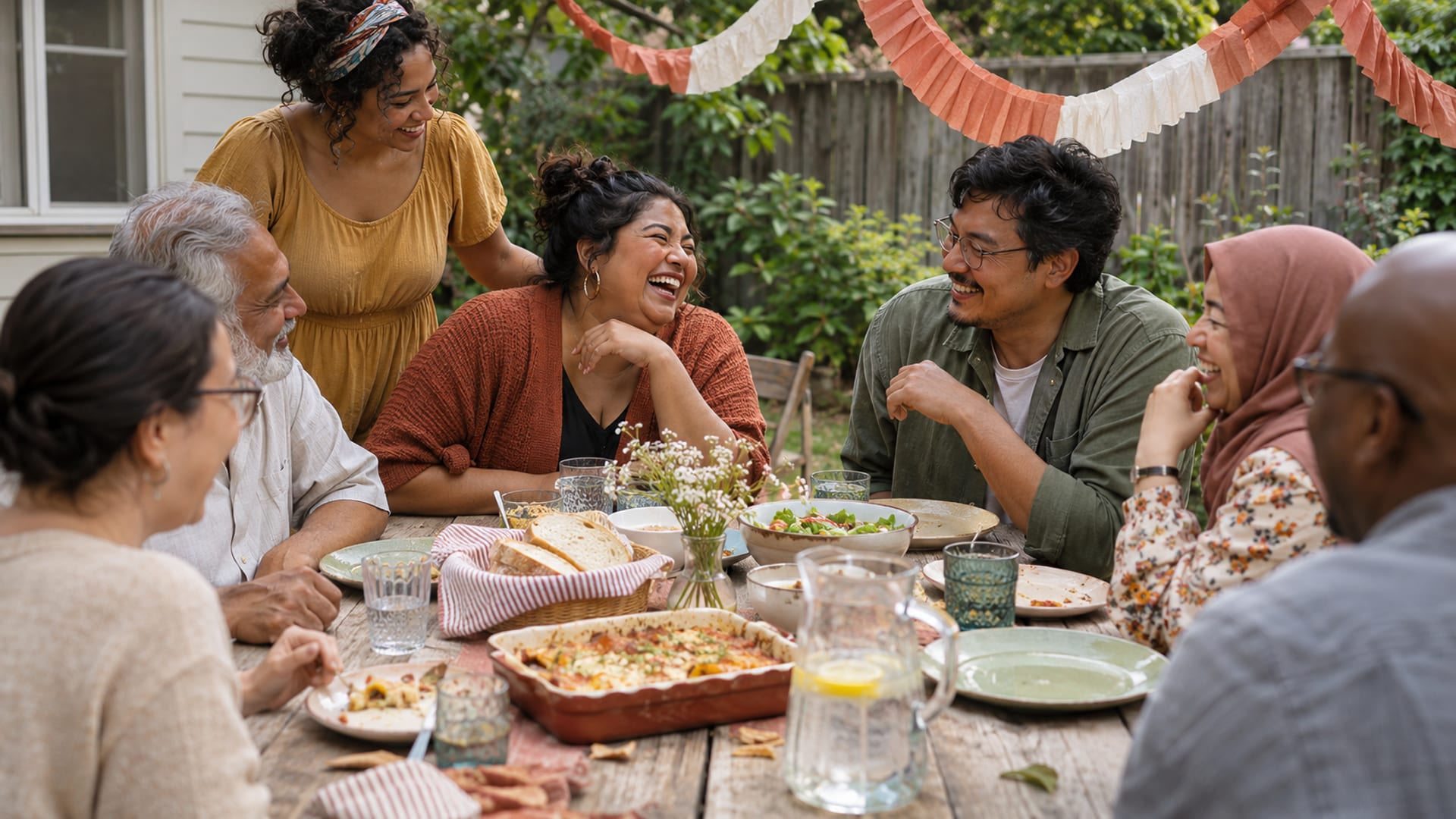
A friend's name comes to mind, and you realize the day for friends is close. You do not need a party or a budget. A voice message that names one memory and one thing you appreciate takes about 15 minutes and costs nothing.
If your friend lives in another time zone, set up a 30-minute video call where each of you brings a drink you already have at home. If they live nearby, take a walk and catch up.
Which day counts depends on where you live, so the dates come first. After them come ideas for home and outdoors, a group, a school or an office, a friend far away, small gifts that cost little or nothing, and a simple order for planning it. If you want help with the words to send, what to say to a friend has plenty.
- Check the date It depends on where you live: July 30, the first Sunday of August, February 14, July 20 or the third Saturday of September.
- Start with what you have A voice message, a walk or a meal from the kitchen costs little or nothing.
- Match the plan to the group Time, distance, household duties and comfort with spending decide what works.
- Keep gifts optional A note naming one memory can be enough, and a spending limit or no-gift option keeps it fair.
- Send one thing this week One message to one friend is a complete plan.
When Friendship Day is, depending on where you are
Several days share the name, and each one belongs to a different place. Pick the one that matches where you and your friends live.
July 30 is the UN International Day of Friendship, set by the UN General Assembly in 2011 to promote peace, dialogue and understanding between people. In the United States, Friendship Day is commonly observed on the first Sunday of August. The idea goes back to a 1919 greeting-card campaign and a 1935 proclamation by Congress, and it is not a federal holiday.
February 14 is the day for love and friendship in Mexico, called Día del amor y la amistad. Friendship celebrations are also commonly held on that date in Ecuador and Guatemala, where it is often called Día del Cariño. In Mexico, friends, classmates and coworkers take part, not only couples, so a plan with friends fits fine on Valentine's Day, including for someone who is single that day.
In Colombia the day moved from February to the third Saturday of September in 1969, as Bogotá's official explanation describes. In 2026 that is September 19. Argentina and Uruguay mark Día del Amigo on July 20, separate from the UN date.
Dates vary by country and tradition, so confirm the local date with a calendar, school, workplace or organizer before planning an event.
| Observance | Date | Where | Background |
|---|---|---|---|
| ObservanceUN International Day of Friendship | DateJuly 30 | WhereWorldwide | BackgroundSet by the UN General Assembly in 2011 |
| ObservanceUS Friendship Day | DateFirst Sunday of August | WhereUnited States | BackgroundCommonly observed; not a federal holiday |
| ObservanceDay for love and friendship | DateFebruary 14 | WhereMexico, Ecuador, Guatemala | BackgroundFriends included alongside couples |
| ObservanceColombian date | DateThird Saturday of September | WhereColombia | BackgroundMoved from February in 1969 |
| ObservanceDía del Amigo | DateJuly 20 | WhereArgentina, Uruguay | BackgroundLocal friendship observance |
Easy ways to celebrate at home or outdoors
The best plan is the one that fits everyone's time, mobility, household duties, transport and comfort with spending, and taking part stays optional. Ideas sort neatly by how much effort you have.
On a five-minute day, send a voice message, write a short note, or text a photo with one sentence about why it made you think of them. "Thinking of you. No reply needed." is a complete message.
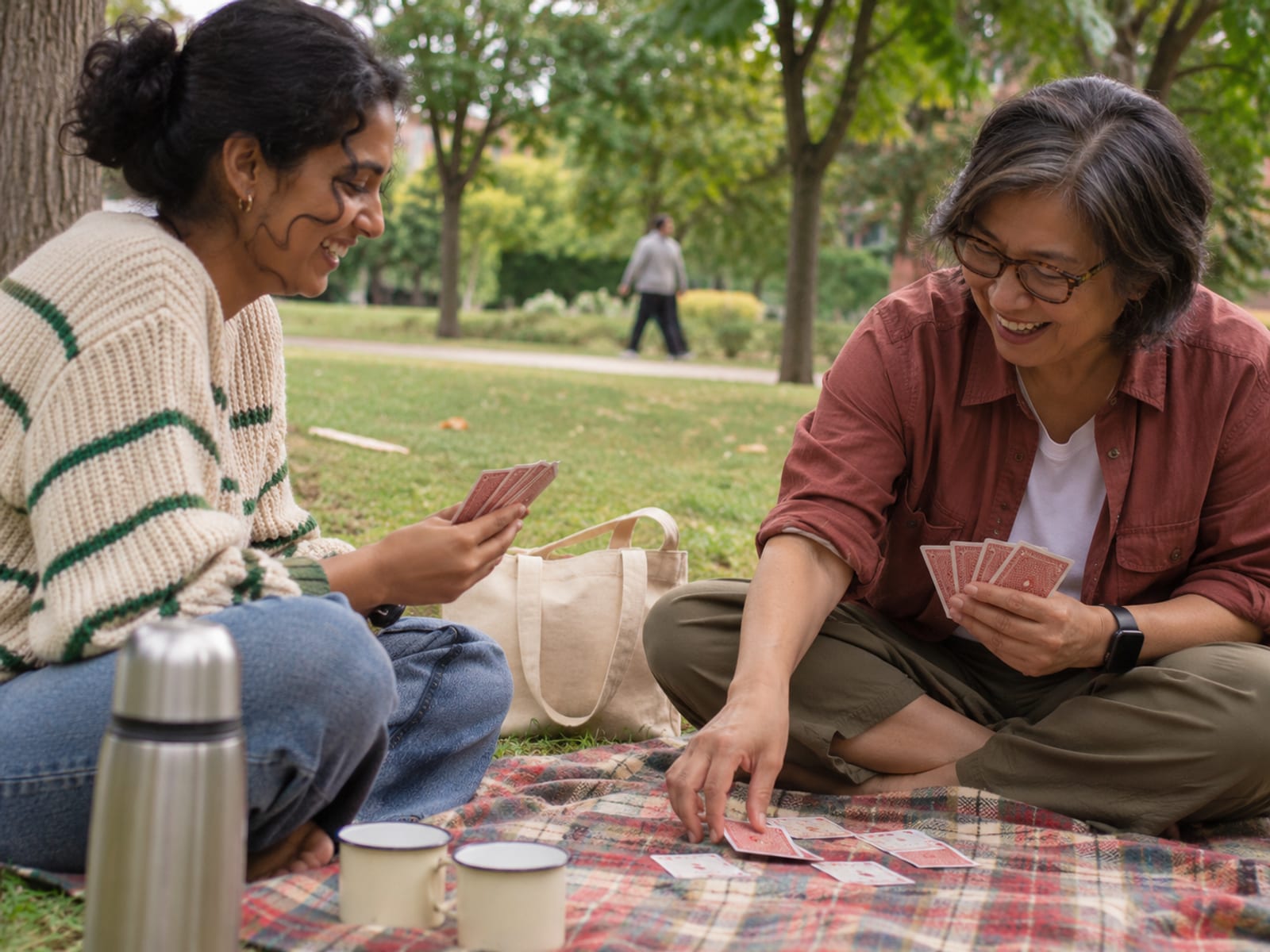
With a free afternoon, take a walk and catch up, or pack a picnic with food from home. A photo walk where each person gets a small theme works well, and so does a free park, library, gallery, market or community event. Volunteering together for a local group turns the afternoon into something shared.
With no money at all, cook a simple meal from what is already in the kitchen. A movie or series night, a slideshow of old photos, cards, trivia, a cooperative game or a shared playlist all cost nothing and need no hosting.
| Situation | Idea |
|---|---|
| SituationNo cost, 15 minutes | IdeaSend a voice message naming one memory and one quality you appreciate |
| SituationNo cost, weekday evening | IdeaA 30-minute video call with a friend in another time zone, each with a drink from home |
| SituationVery low budget, one person | IdeaA note and one printed photo in an envelope |
| SituationVery low budget, household of four | IdeaA pantry meal, a card game and one song each |
| SituationSmall group, no purchase | IdeaA park walk where everyone brings one question |
| SituationSmall group with shared food | IdeaA potluck, one dish or drink each |
| SituationBusy schedules | IdeaOne photo and one sentence from each friend, read when convenient |
Ideas for a group, a school or an office
A group does not need a big budget either. Agree on a spending limit of zero or a small amount everyone is comfortable with before making plans, and the rest gets easier.
Some options that work for a group of friends, a class or a team:
- A potluck where each person brings one dish or drink.
- A favorite-memory circle where each person tells one short story.
- A low-cost talent show, karaoke or quiz.
- A book, recipe or film swap using what people already own.
- A secret appreciation exchange with notes instead of bought gifts.
If you want something to ask around the table, questions to ask a friend can start a better conversation than "so, how's work?"
At school, paper cards made during a scheduled activity work well, with taking part limited to writing a kind message instead of buying a gift. That way no child feels left out by what a family can spend.
In an office, an optional exchange works when it has a clearly stated spending ceiling, a deadline and a no-gift alternative, such as appreciation notes. People can join in whichever way suits them.
Ideas for a friend who lives far away
Distance changes the plan, not the point. A phone or video call at a time that works across time zones is the simplest start, and a handwritten note or postcard in the mail adds something they can hold.
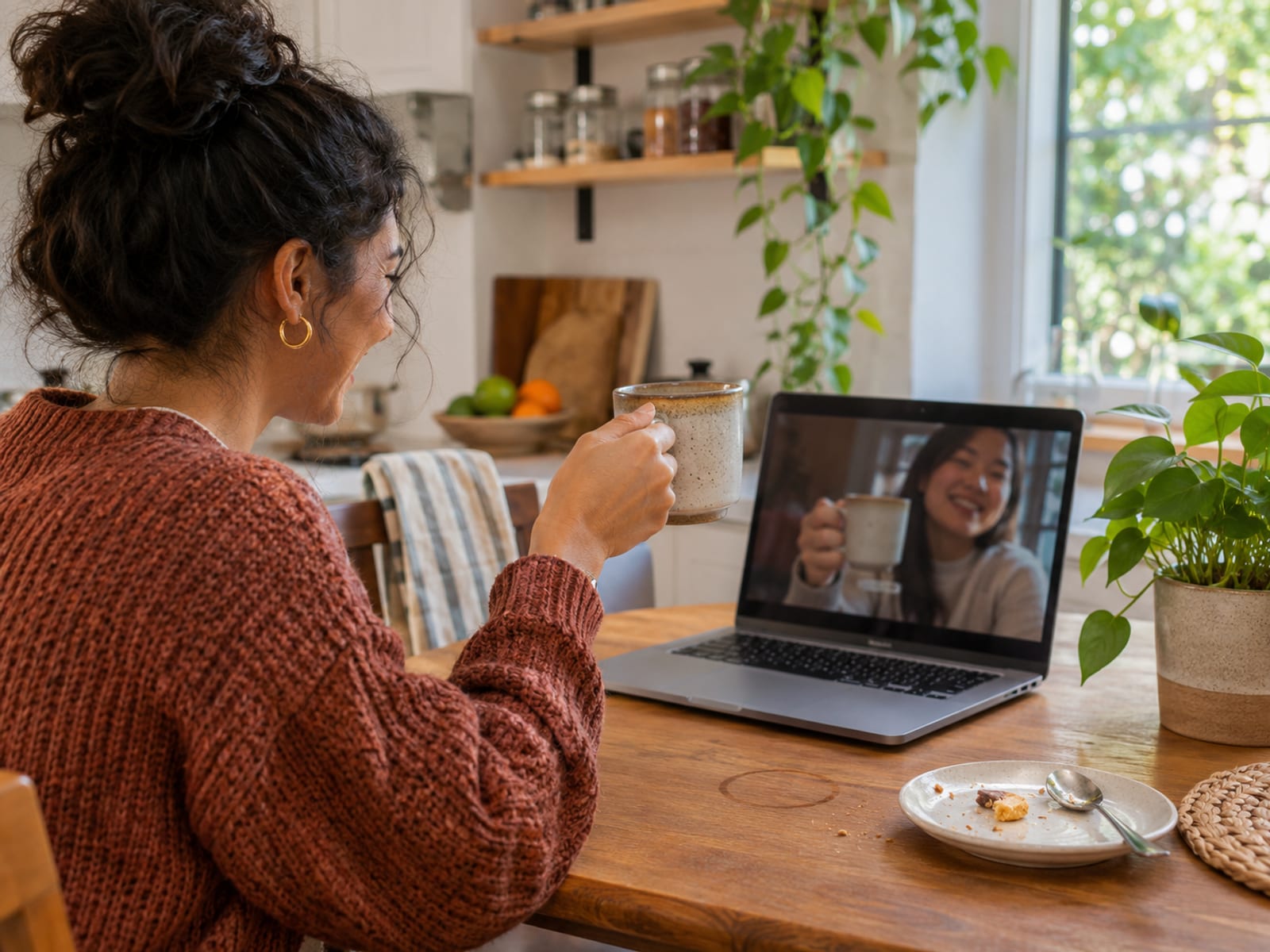
For a five-minute version, record a voice message. For a free afternoon, cook the same simple recipe during a video call, or watch the same film or episode and talk about it afterward. For a no-money version, build a shared playlist and add songs over several days.
If schedules never line up, exchange one photo a day for a week, each with a sentence about why you chose it. Short voice messages work when live calls are hard. You can also talk about a future visit without promising a date that is not yet practical.
A few practical limits are worth naming in plain words: time zones, internet access, disability access, privacy and shipping costs. Some friends prefer live conversation; others like messages they can read later. Ask which feels easier, and let that decide.
Small gifts that cost little or nothing
The nicest small gifts are specific. A handwritten note that names one quality or memory often means more than something bought, and a list of five memories or inside jokes does the same job in a different shape.
Other options you can make from what you have:
- A printed photo, collage or small album from pictures you already own.
- A playlist with a line about why each song is there.
- Something baked or cooked at home.
- A bookmark, drawing, paper flower, friendship bracelet or decorated card.
- A help coupon for a realistic favor, such as cooking, errands or childcare.
A voice message recorded just for them counts too, and so does a small memory box made from a reused container with handwritten slips inside. If you are stuck on wording, words to send a friend gives you starting points.
The gift should match the relationship and should not create pressure to give something back. In a school or workplace, agree first whether gifts are expected, optional, anonymous or limited by a shared budget.
Planning it so everyone can join
A plan works best when people know what they are saying yes to. The order below keeps it simple and keeps it fair.
Confirm the date
Check the local date with a calendar, school, workplace or organizer.
Ask who wants to join
Taking part is optional, so ask before assuming.
Pick a free or low-cost plan
A walk, a potluck or a call costs little or nothing.
Set a limit and offer a no-gift option
If gifts are involved, agree on zero or a small amount, and welcome notes instead.
Check schedules and access
Look at time zones, transport, accessibility and food needs.
Send the invitation
Include the time, place, activity and what to expect.
Follow up
Reach out to anyone who could not come.
For a shared exchange, say whether taking part is voluntary, what the spending limit is, the date, and what happens if someone cannot take part. A small handmade item or a note works when money is tight.
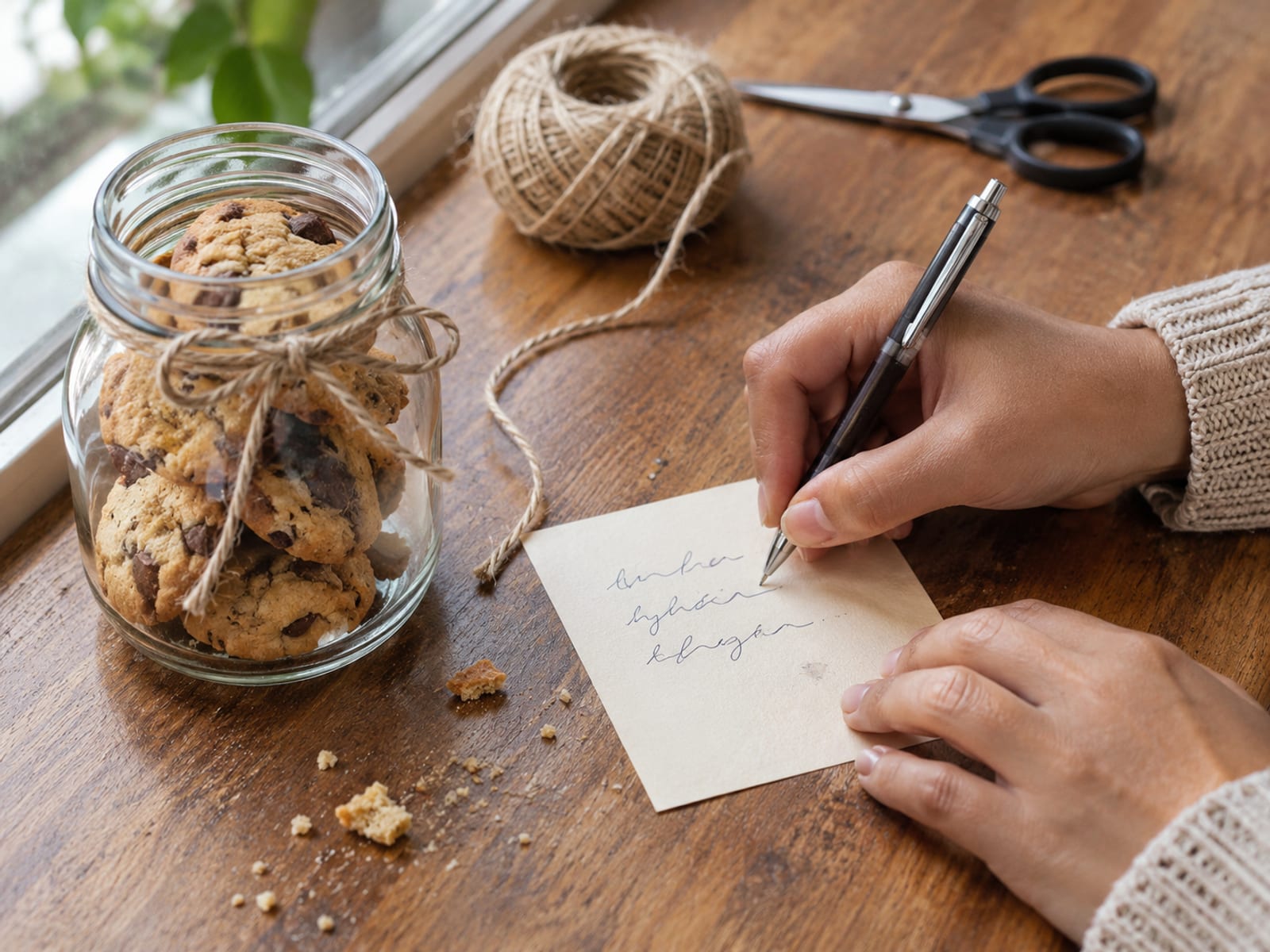
The invitation itself can be short. An idea to borrow: "No gifts needed. Bring a snack if you like. Sunday afternoon at the park by the library?" It names the time, the place and the expectations in three short sentences.
If you are always the one organizing and little comes back, one-sided friendships are worth a read when you have a quiet minute.
1. Which date is the UN International Day of Friendship?
2. When does Colombia celebrate its day for love and friendship?
3. What should you tell people when you plan a gift exchange at school or work?
4. What works for a friend in another time zone with a busy week?
If you do not have friends nearby this year
Some years the friend group is small, far away or not there yet. That is a fine place to start from, and it still leaves you with a plan.
Pick one person you have not spoken with for a while and send one message. Look for a free community event, a library event or a volunteer shift where people meet around a shared task. Start small, with one coffee or one walk. If you want more on this, how to make friends as an adult and how to cope with loneliness go further.
If loneliness, sadness or worry goes on for weeks or gets in the way of work, school or sleep, talking to a doctor or a counselor is a reasonable step. And if a friendship involves threats, stalking, coercion or abuse, safety or emergency services come first.
Questions people ask
When is Friendship Day?
It depends on where you live: July 30 worldwide, the first Sunday of August in the US, February 14 in Mexico, Ecuador and Guatemala, the third Saturday of September in Colombia, and July 20 in Argentina and Uruguay. Confirm the local date with a calendar, school or workplace before you plan anything, since traditions differ even within a country.
What can you do for Friendship Day?
Pick by effort: a voice message for a five-minute day, a walk or a picnic for a free afternoon, or a potluck for a group. The sections above sort each idea by time and money, so you can match one to your week.
What is a nice small gift for a friend?
A handwritten note naming one specific memory or quality is hard to beat, and a printed photo from pictures you already have is a good second. Keep the gift light so your friend does not feel pressure to give something back.
What are some fun activities for a group of friends or a class?
A potluck, a favorite-memory circle, a low-cost talent show or quiz, or paper cards all work. Agree on a spending limit of zero or a small amount before the day, and let people join in whichever way fits.
How can I celebrate with a friend who lives far away?
Set a call at a time that works in both time zones, or cook the same recipe or watch the same film on both sides and talk afterward. A photo-a-day exchange for a week suits friends whose schedules rarely match.
What can friends do on Valentine's Day?
In Mexico, February 14 includes friends, classmates and coworkers as well as partners, so a walk, a meal, cards or a small exchange with a spending limit all work. A plan with friends suits someone who is single that day just as well.
One thing to try this week
Pick one friend and one idea that fits your week; the 15-minute voice message is the lightest. Send it or do it, or, if the day is still weeks away, put the date in your calendar and send one message ahead of it.
For more on friendship and relationships, the Relationships section on Motivation Facts has more to read, and if you have a question or an idea for a topic, you can send us a note through the contact page.
International Day of Friendship. July 30, the day the UN General Assembly set aside in 2011 for friendship between people and peoples.
National Friendship Day. A US custom commonly observed on the first Sunday of August; it is not a federal holiday.
Potluck. A shared meal where each person brings one dish or drink.
Spending limit. An amount of zero or a small figure everyone agrees on before gifts are involved.
No-gift option. A way to take part, such as writing a note, without buying anything.
Asynchronous plan. A plan where each person joins when it suits them, such as sending a photo and a sentence.
Memory circle. A group activity where each person tells one short story about a favorite memory.
Sources
- United Nations General Assembly, Resolution 65/275
- Bogotá city government, Why Bogotá celebrates the day of love and friendship in September
- NHS, Counselling
- Argentina.gob.ar, Día del Amigo
- Uruguay Ministry of Education and Culture, Calendar notice
- CONDUSEF Mexico, February 14 customs and low-cost gifts