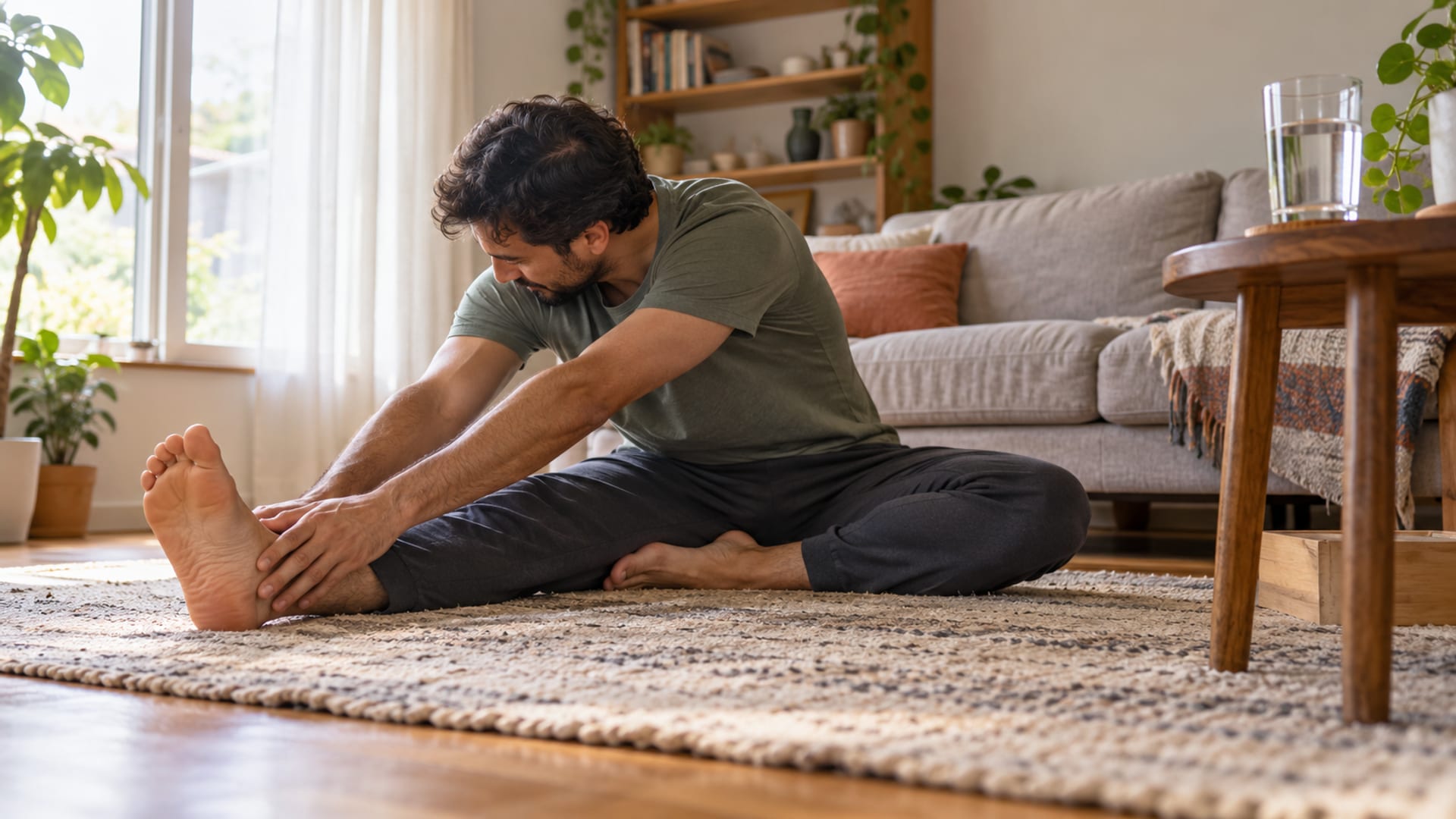
You have five minutes before the next thing, and your shoulders are somewhere near your ears. Put the phone down. Breathe in gently through the nose and out through the mouth, counting slowly to five each way, and keep going for about five minutes. That is a full plan for this minute, and it costs nothing.
Below you'll find things to try in five minutes, things for the rest of today, and habits for the coming weeks. There are also steps for work stress and money stress, ways to switch your mind off at night, and a plain look at how stress differs from anxiety and when it is time to talk to a doctor.
Take what fits your day and leave the rest. A busy week, a tight budget and a noisy house are all normal, and none of these ideas needs more time or money than you have.
- Start with five minutes Slow breathing, a short walk or a quieter spot can calm the moment, even though they do not remove what caused it.
- Name what you can change Separate the problem you can act on today from the worry you cannot solve yet.
- Keep a few steady habits Regular sleep, some movement and time with people help more than any single trick.
- Be careful with quick fixes No food, drink or supplement is a proven fast cure, so ask a doctor or pharmacist first.
- Know when to talk to someone Symptoms that last about two weeks or more, or get in the way of daily life, are a reason to see a doctor.
What to try in the next five minutes
When stress is high right now, the aim is small: take the edge off so you can think about the next step. The NHS describes a simple breathing exercise for stress that works sitting, standing or lying down.
- Get comfortable, in a chair, against a wall or on the edge of a bed.
- Let your breath move down toward your belly without forcing it.
- Breathe in gently through your nose.
- Breathe out gently through your mouth.
- If it helps, count slowly from 1 to 5 on the way in and again on the way out, and keep going for about five minutes.
If breathing is not your thing, there are other short options. You can walk or stretch while paying attention to what you are doing, or step outside, or move to a quieter corner. You can notice your feet on the floor or the air on your skin. You can send a friend a message, such as "Can I call you after dinner? I just need to talk something through," or take a short break from the news and social media.
On a five-minute day, one of these is plenty. With a free afternoon, you could add a longer walk and a phone call. With no money to spend, everything above is already free. These can help you feel calmer in the moment, but they do not remove whatever caused the stress, and that is fine; calming down first often makes the next decision easier.
How stress shows up in the body and mood
Stress is the body and mind's response to something difficult, new or demanding. A little of it can help you rise to a challenge, but when it is strong or goes on for a long time, it can start to affect daily life. The CDC describes stress as a physical and emotional response, and the signs vary from person to person.

In the body, you might notice a faster heartbeat, sweating, quicker breathing or tight muscles. Headaches, body aches and an upset stomach are common too, along with trouble sleeping or changes in appetite and energy. In mood and thinking, stress can show up as irritability, worry, sadness or feeling overwhelmed, and it can make it harder to concentrate, decide things or relax.
Some people also notice they are drinking, smoking or snacking more than usual to cope. That is worth noticing without judging yourself for it. One more point matters here: chest pain, shortness of breath or strong stomach pain should not be assumed to be stress, because medical conditions can cause the same symptoms. If any of these are new or severe, get them checked.
Habits for the coming days and weeks
Steady habits do their work quietly. The ones public-health bodies such as the WHO mention most are a regular sleep and waking time, regular movement, regular meals and water, and staying in touch with people you trust. A ten-minute walk after dinner counts as movement, and a phone call to a friend counts as staying in touch.
Large tasks feel heavier than they are. Try splitting one into a small first action: open the document, write the first sentence, answer the one email that is blocking the rest. It also helps to sort your worries into two piles. Some are problems you can act on, and some are worries you cannot solve yet. For the first pile, the NHS suggests choosing one solvable problem, listing a few options, thinking through the good and bad of each, and then making a specific plan.
Make room for something you enjoy, even if it is small and a little silly. If you want more gentle everyday ideas, the self-care ideas page has plenty. The table below puts the first small step and the longer view side by side for the situations people mention most.
| Situation | First small step | For the coming weeks |
|---|---|---|
| SituationImmediate tension | First small stepFive minutes of gentle breathing, walking or stretching | For the coming weeksPractice regularly and notice your triggers |
| SituationWork overload | First small stepList your tasks and ask which come first | For the coming weeksSet limits and realistic deadlines |
| SituationMoney worry | First small stepList urgent bills and pick one next action | For the coming weeksMake a simple plan and use a free local advice service |
| SituationRacing thoughts at night | First small stepWrite down tomorrow's first step | For the coming weeksKeep a steady sleep routine |
| SituationFeeling cut off from people | First small stepMessage one person you trust | For the coming weeksKeep regular contact |
| SituationSymptoms that persist or worsen | First small stepContact a doctor or other healthcare professional | For the coming weeksFollow the plan you agree together |
Stress at work and stress about money
Work stress often has a clear shape once it is on paper. For example, you might write down what is creating the pressure: too much to do, unclear priorities, a conflict, or not knowing what is coming next. Then mark what you can change and what you cannot. The NHS guidance on work-related stress suggests talking to your manager about priorities, and you could say, "Could we look at which of these should come first this week?" That one sentence often turns a vague pile into an ordered list.

Limits help as well. You might decide that you take your break away from your desk, or that notifications go quiet after the agreed end of the day. Where there is a trusted colleague, a workplace wellbeing service, a union or an employment advice service, those are good places to ask about workload, conflict or job worries. If the problem involves possible job loss, discrimination or unsafe conditions, a local authority or free advice service can tell you where you stand. You will find more on this theme in the career growth section.
Money stress tends to grow when bills sit unopened. For example, you might gather every bill into one folder, write the due dates on one page, and then open one letter or make one call at a time. The NHS page on money worries and mental health suggests contacting lenders or landlords early to ask what options exist, and asking someone you trust to sit with you if starting feels hard. Free advice services exist in many places, but names and rules differ by country, so look for a local government, nonprofit or regulated advice service near you.
Switching your mind off at night
A mind that will not stop at 11 p.m. is usually carrying unfinished business. Before bed, write down the first thing you will do tomorrow and any worry that keeps circling, so it is on paper instead of in your head. The NHS suggests setting aside 10 to 15 minutes earlier in the evening as worry time, so the worrying has its own slot well before you lie down.
The rest is a matter of making the room and the hour friendly to sleep. MedlinePlus suggests a regular bedtime and waking time, fewer screens and less news before bed, a dark, quiet and cool room, and caffeine earlier in the day. A bath, calm music or a few minutes of gentle breathing can be a soft ending to the evening. None of that costs anything.
If you are still awake after about 20 minutes, get up and do something quiet until you feel sleepy, then go back to bed. Alcohol is not a sleep plan; it may feel relaxing, but it tends to make sleep worse. Sleep trouble that keeps going is a good reason to talk to a doctor, and there is no need to wait until you are exhausted to ask.
Food, drinks, caffeine and supplements
People often ask which drink, vitamin or food will calm stress, and many people ask about home remedies and natural pills. The plain answer is that regular meals and enough water support your health in general, but no food or drink is a proven quick fix for everyday stress. That includes anything claiming to lower cortisol or reset your nervous system fast.

Caffeine can bring restlessness, a faster heartbeat or poor sleep in some people, and MedlinePlus on caffeine notes that sensitivity differs. If you feel jittery, easing off in the afternoon may help. Alcohol can feel relaxing for a short while, but it can worsen sleep, and health bodies do not advise using it to cope.
Supplements are not a general stress cure, and the NCCIH says the evidence for many of them is limited. Kava, for example, has been linked to serious liver damage. A doctor or pharmacist is the right person to ask, especially if you are pregnant, take medicines or have a health condition.
If by "home remedy" you mean something cheap that helps, the honest list is short and mostly free: breathing, a walk, rest, and talking with someone you trust.
Stress, anxiety and when to talk to someone
Stress is usually tied to a situation and may ease as the situation changes. Anxiety can be a normal response to stress, while an anxiety disorder involves intense fear or worry that is hard to control, lasts, and gets in the way of daily life. Only a qualified professional can diagnose it, so if you wonder which one you are dealing with, that question is worth taking to a doctor.
It is a good idea to arrange help from a doctor or other healthcare professional when any of these are true, as the NIMH and others describe:
- Your symptoms are severe or last about two weeks or more.
- Sleep, appetite, work, study or relationships are affected.
- Worry or fear is hard to control or leads you to avoid things.
- You are using alcohol or other substances more often to cope.
- Physical symptoms are unexplained or keep coming back.
If you have thoughts of suicide or a risk of harming yourself, or you have new or severe chest pain, serious trouble breathing or fainting, call your local emergency or crisis service right away. For gentler everyday ideas, the Self-care and Wellbeing section is a good next stop.
1. You are still awake after about 20 minutes in bed. What is a good next step?
2. Who should you ask before taking a supplement for stress?
3. You have a pile of unopened bills. What is a calm first move?
4. Which of these is a reason to see a doctor?
One thing to try this week
Pick one small habit from above and give it a day and a time: a five-minute breathing break at the same point each afternoon, a ten-minute walk after dinner, or writing tomorrow's first task before bed. Try it for the week, and if it does not fit your life, swap it for another one. That is not failing; it is adjusting.
If stress is severe, lasts about two weeks or more, or is getting in the way of sleep, work or relationships, talking to a doctor or other healthcare professional is the next step. For more ideas, the self-care ideas page is a good place to go. Motivation Facts is glad to hear from you, so if you have a question or an idea for a guide, use the contact page.
Questions people ask
What are 5 ways to manage stress?
Five steady ones are slow breathing, a short walk, a regular sleep routine, talking to someone you trust, and splitting a big task into small actions. You can use any of them for free. Pick the one that fits today, and let the others wait for another day.
How can I relieve stress quickly, in five minutes?
Put the phone down and breathe in gently through your nose and out through your mouth, counting slowly to five each way, for about five minutes. If that does not suit you, a short walk, a stretch or stepping outside works too. These can calm the moment without removing the cause.
What is the difference between stress and anxiety?
Stress is usually linked to a situation and may ease as the situation changes. Anxiety can be a normal response to stress, but an anxiety disorder involves intense worry that is hard to control, lasts, and affects daily life. Only a qualified professional can tell the two apart, so a doctor is the right person to ask.
What are signs of too much stress, and where does stress hurt?
Common signs include a faster heartbeat, tight muscles, headaches, an upset stomach, trouble sleeping, irritability and trouble concentrating. Signs differ between people, and the body is only one place to look; mood and focus change too. Chest pain, shortness of breath or stomach pain should not be assumed to be stress, so have those checked.
How do I switch my mind off to sleep when I am stressed?
Write down tomorrow's first step and any worry before bed, and keep a short worry time earlier in the evening. Cutting screens and news before bed also helps. If sleep trouble keeps going, mention it to a doctor.
What drinks, vitamins or foods reduce stress?
No food, drink or supplement is shown to ease everyday stress quickly, so sleep, movement and breathing are the steadier options. Regular meals and water support general health, and caffeine earlier in the day may be easier on your sleep. Ask a doctor or pharmacist before trying any supplement.
Stress. The body and mind's response to a difficult, new or demanding situation.
Anxiety. A feeling of worry or fear that can be a normal reaction to stress; an anxiety disorder is more intense and lasts longer.
Worry time. A short slot, often 10 to 15 minutes earlier in the evening, set aside for thinking through worries.
Grounding. Paying attention to what you can feel right now, such as your feet on the floor.
Slow breathing. Breathing in gently through the nose and out through the mouth at an unhurried pace.
Sleep routine. Keeping bedtime and waking time fairly steady and winding down the same way each night.
Trigger. A situation or moment that tends to set off stress for you.