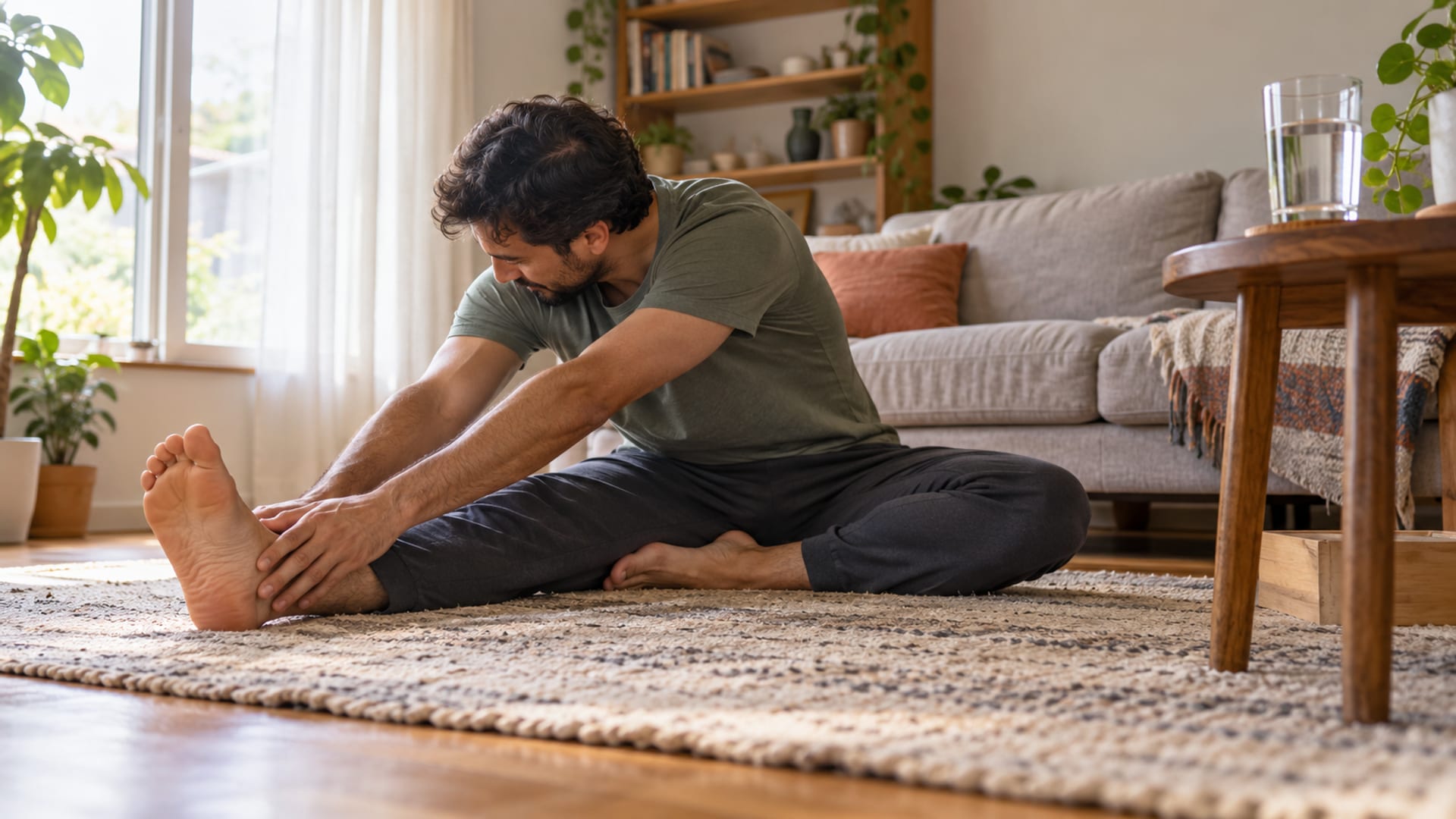


The dishes are done, the day is gone, and you realize you have barely moved since breakfast. It happens to nearly everyone with a full schedule, and the fix is smaller than most plans make it sound. Ten minutes counts. So does a short walk after lunch, two songs danced to while the kettle boils, or a few trips up the stairs.
The weekly target from the major health agencies is about 150 to 300 minutes of moderate activity, or 75 to 150 minutes of vigorous activity, or a mix of the two, plus muscle-strengthening work on at least 2 days. That is a goal to build toward, and it can be reached in small pieces.
Below you will find ways to fit movement into the day you already have, a five-minute day, a ten-minute circuit, a twenty-minute routine, a plan for a week that might fall apart, and a note on when to check with a doctor.
- The weekly target About 150 to 300 minutes of moderate activity a week, plus muscle-strengthening on at least 2 days.
- Short bursts count Five or ten minutes add up toward the week, and some activity is better than none.
- Pick a minimum day Decide ahead of time that five minutes is enough on a hard day.
- Attach it to something you already do After lunch, after brushing your teeth, while the kettle boils.
- Check with a doctor if you have a health condition A quick conversation first is a good idea before starting something new.
How much movement is enough
The CDC adult guidelines put the weekly aerobic target at 150 to 300 minutes of moderate activity, and the NHS gives a simple way to tell what moderate feels like: you are breathing faster, but you can still talk. If you can sing, you are going easy; if you can barely get a word out, you are working hard. This is a public-health target, not a pass-or-fail line, so if you do very little now, any starting point is a fine one.
Short bouts count. The current message from the World Health Organization is that every movement counts, and the CDC says activity can be spread across smaller chunks of the day. Walking around your home counts as movement too.
You may have heard that 10,000 steps a day is the goal. It is a popular target, not an official guideline, so you do not need to hit it for your walking to be worth doing.
What about working out every other day? The guideline is about the weekly total, not a schedule. Four sessions of 20 minutes come to 80 minutes, and three come to 60, which leaves a gap that a few short walks or active chores on the off days can help close. Treat those numbers as a starting point you can adjust.
| Option | Time | Example | What it adds |
|---|---|---|---|
| OptionMovement break | Time2 to 5 minutes | ExampleMarching in place, walking, easy stretching | What it addsBreaks up long stretches of sitting and adds a little activity |
| OptionShort walk | Time5 to 10 minutes | ExampleA brisk walk before work or after dinner | What it addsCounts toward your moderate minutes when you are breathing a bit faster |
| OptionHome circuit | Time10 minutes | ExampleSquats, wall push-ups, reverse steps, marching | What it addsMixes strength work with a raised heart rate |
| OptionLonger home session | Time20 minutes | ExampleWarm-up, three rounds of four moves, cool-down | What it addsA solid block toward the weekly total |
| OptionWeekly target | Time150 to 300 minutes | ExampleBrisk walking or other moderate activity | What it addsThe public-health range, plus strength work on 2 days |
Movement that fits inside the day you already have
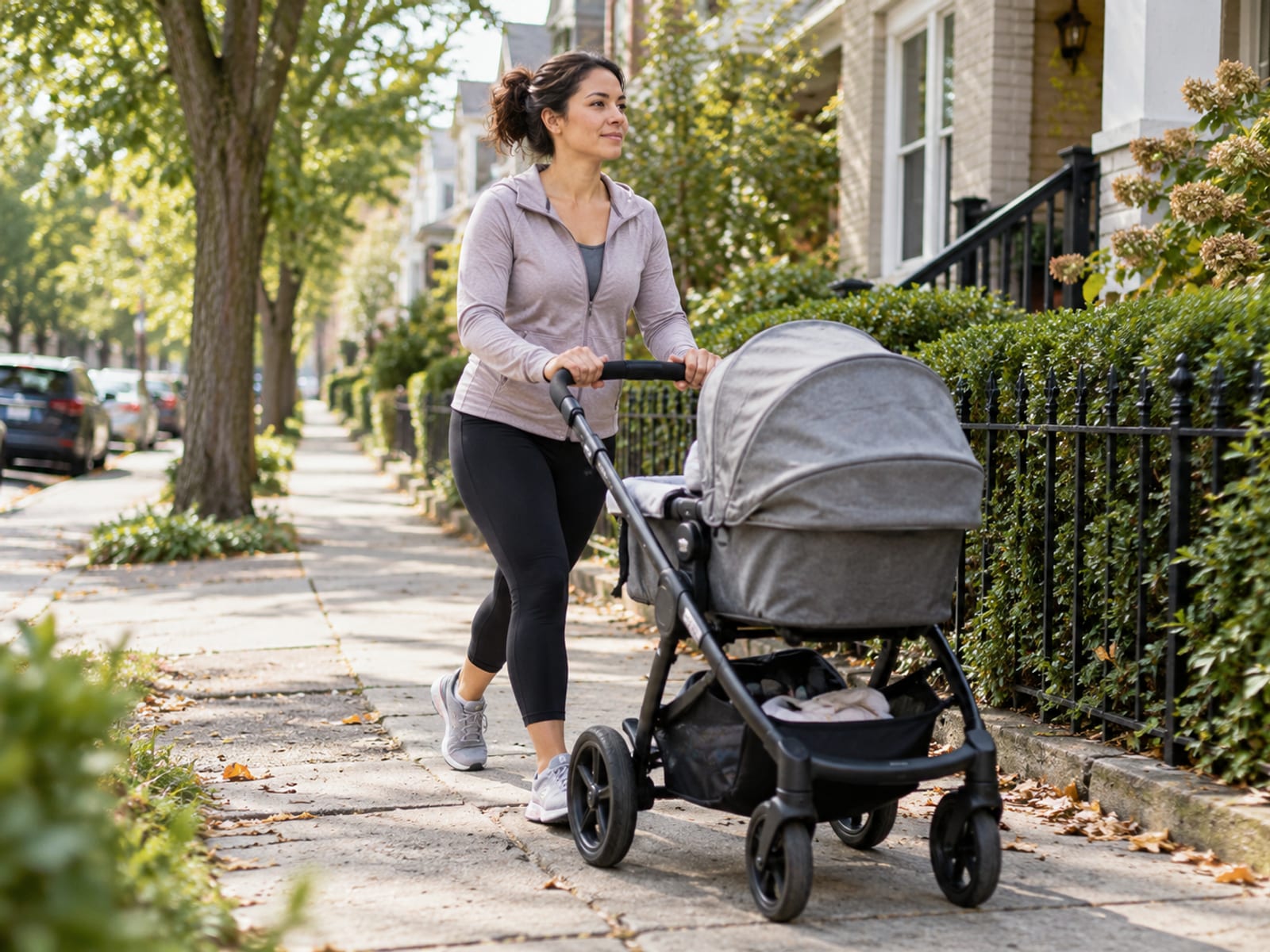
Most of us do not need a new hour; we need to notice the minutes already there. A parent might walk part of the school trip instead of driving the whole way, or do chair sit-to-stands in the living room while a child plays nearby. Someone who works at a desk can walk during phone calls that do not need a computer, take the stairs for one or two floors, and stand up between tasks instead of scrolling in the chair.
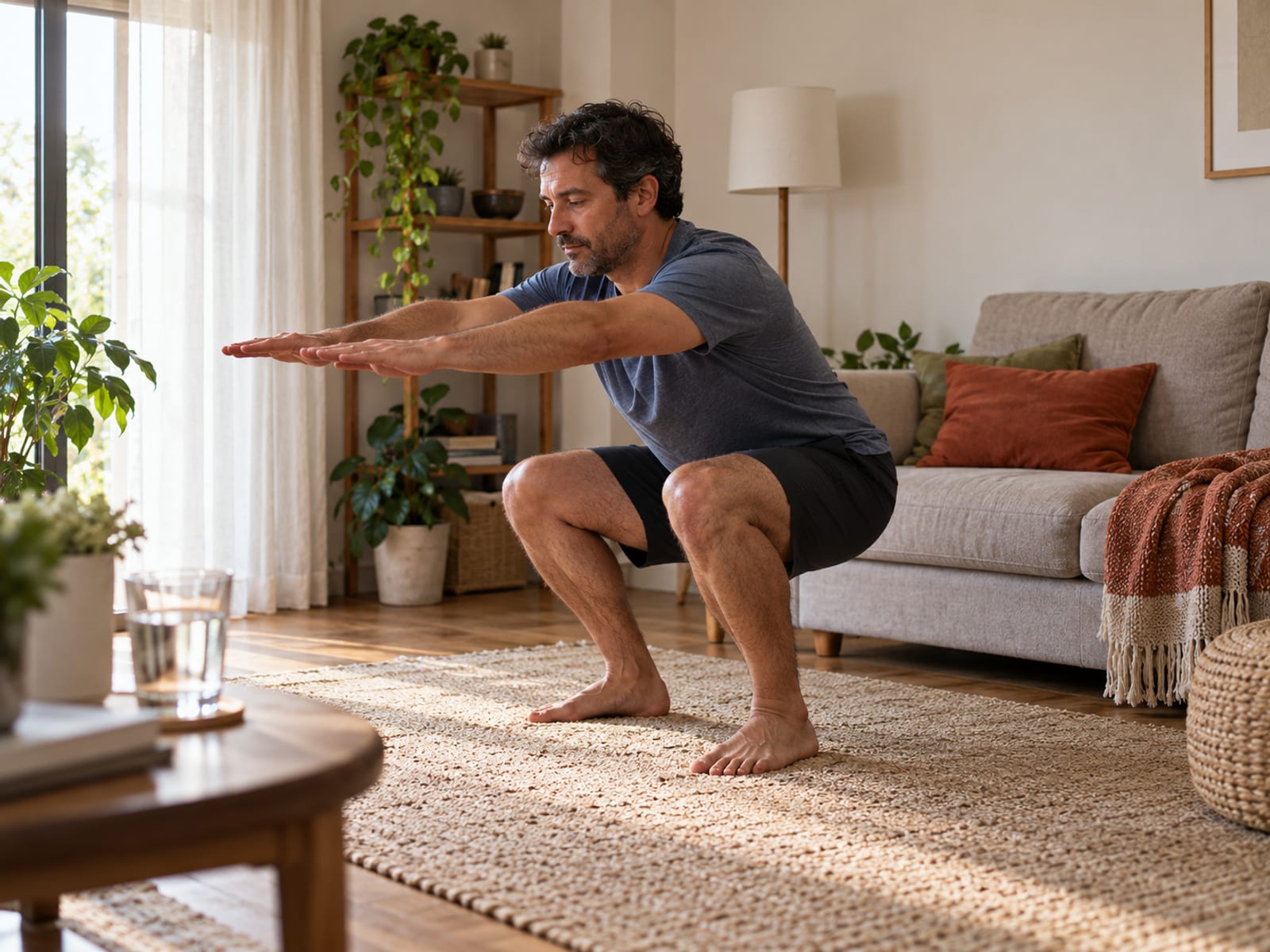
If you work shifts, you could keep two options in your pocket: a 10-minute walk before the shift, or a 5-minute circuit right after waking, whichever the day allows. A caregiver who cannot leave the house can use three to five-minute blocks of marching, gentle squats and stretching, kept easy enough that you stay alert to the person you are looking after. In a small apartment, marching, step-touches, wall push-ups and standing knee lifts need almost no floor space at all.
Not every chore is brisk exercise, and it helps to be honest about that. Light movement, like tidying or pacing during a call, breaks up sitting and is worth doing. Brisk walking, dancing, faster stair climbing and carrying groceries up a hill count more toward the moderate target.
A five-minute day
Some days, five minutes is the real size of what you have. This sequence works in your socks, in work clothes or in whatever you are already wearing. Start with a minute of slow walking in place. Then spend a minute on sit-to-stands from a sturdy chair, or shallow squats if you prefer. Follow that with a minute of wall push-ups, standing an arm's length from the wall and bending your elbows.
For the fourth minute, march in place or do step-touches from side to side. Finish with a minute of easy walking and slow breathing to settle down. That is the whole thing, and it counts.
If you want the version that costs nothing and needs no changing at all, walk around your home at a steady pace for five minutes, or step outside and walk to the end of the block and back.
A free ten minutes
When you have ten minutes, a short circuit gives you some strength work and a raised heart rate in one go. It uses five movements. March in place or do low-impact step-touches. Do squats or chair sit-to-stands. Do wall or countertop push-ups. Do alternating reverse steps, stepping one foot back and returning, or supported lunges holding a counter. Finish with standing knee lifts.
Work each movement for 45 seconds, then take 15 seconds to change to the next, and go through the whole circuit twice. If you are new to this, work for 20 to 30 seconds per move and rest when you need to. A bit of easy walking before and after works as your warm-up and cool-down.
Warm up
A minute or so of easy walking in place and loose shoulders.
Marching or step-touches
45 seconds
Squats or chair sit-to-stands
45 seconds
Wall or countertop push-ups
45 seconds
Reverse steps or supported lunges
45 seconds
Standing knee lifts
45 seconds, then repeat the circuit once
Cool down
Slow walking and a few deep breaths.
A free afternoon or twenty minutes
Twenty minutes gives you room for a proper warm-up and a bit more work. Begin with 3 minutes of easy walking in place and gentle shoulder rolls. Then comes the main part, 12 minutes of three rounds of four movements: squats or chair sit-to-stands, wall push-ups, alternating step-backs, and marching or dancing. Each move lasts 45 seconds, with 15 seconds to change.
After that, spend 3 minutes repeating the two easiest movements at a relaxed pace, and finish with 2 minutes of slow walking and gentle mobility. Jumping is optional; skip it if it bothers your joints or balance, and use a wall, counter or chair for support whenever you want it.
Easy start
3 minutes of walking in place and shoulder movements.
Three rounds of four movements
12 minutes in all. Squats or sit-to-stands, wall push-ups, alternating step-backs, then marching or dancing, 45 seconds each with 15 seconds to change.
Easy repeat
3 minutes of the two easiest movements at a relaxed pace.
Cool down
2 minutes of slow walking and gentle mobility.
If the afternoon is truly free, a longer brisk walk outside or in a park costs nothing and counts toward the week just as well.
Planning a week that might fall apart
Plans fall apart on Wednesday because Wednesday arrives with its own demands. A little planning gives movement a place to live. Pick a day, a time and a spot, and write it down. Attach the movement to something that already happens: a 10-minute walk after lunch, squats after brushing your teeth, stretching while the kettle boils. A partner or a friend on a walking call makes it harder to skip. Choose a backup time in case the first one is swallowed by work or childcare.

The most useful trick is a minimum day and a full day. A minimum day is five minutes. A full day is the 20-minute routine. On a good week you might walk briskly for 10 minutes at lunch on Monday, do the 10-minute circuit on Tuesday, walk during a phone call and take the stairs on Wednesday, walk after dinner on Thursday, do the circuit again on Friday, take a family walk on Saturday, and rest or plan the next week on Sunday.
When a day falls apart, shrink the plan and do the minimum. Never double up tomorrow to make up for it. Planning helps some people and is a tool, not a guarantee, so keep what works and drop what does not. If you are building a routine around this, how to build a habit goes deeper on keeping small actions going.
1. What does the weekly guideline ask for?
2. What does the talk test tell you about moderate activity?
3. Is 10,000 steps a day an official guideline?
4. Your Wednesday fell apart. What is a good next move?
Starting safely and knowing when to stop
Start with an amount that feels manageable and build up slowly. Warm up with easy movement, cool down afterward, and use a wall or sturdy chair for balance when you need it. If you have a health condition, have been inactive for a long time, have a disability that affects movement or are unsure about vigorous exercise, check with a doctor before starting a new exercise program.
Stop and get medical help if you notice any of these while moving:
- Chest pressure or pain, especially spreading to the shoulder, arm or neck
- Severe or unusual shortness of breath
- Fainting, severe dizziness or confusion
- A new racing or irregular heartbeat
- Severe pain, or nausea that does not settle with rest
If you feel unwell on any day, rest, and restart gently once you have recovered. Sleep and stress both affect how much energy you have for movement, and the guides on sleep habits and managing stress cover them in their own right.
Short bursts of activity added up across the day were linked to health benefits much like longer sessions, though it is not yet clear that one pattern is best. Standing or walking for a few minutes after a meal brought blood sugar down more than staying seated, which was seen in short lab tests and does not promise long-term results.
Questions people ask
How much exercise is enough in a week?
About 150 to 300 minutes of moderate activity, or 75 to 150 minutes of vigorous activity, or a mix, plus muscle-strengthening activity on at least 2 days. If you are starting from very little, begin with a few minutes and add a little each week.
Is exercising every other day enough?
It can be, because the weekly total is what the guideline counts. Short walks or active chores on the off days help fill any gap.
Does a 10-minute workout count?
Yes. Short bouts count toward the weekly total, and several ten-minute pieces across a day add up like any other minutes.
What exercises can I do in 10 or 20 minutes at home?
The routines above lay it out step by step. Squats or chair sit-to-stands, wall push-ups and marching are a good place to start, and you can add reverse steps and knee lifts as you go.
Is 10,000 steps a day the goal?
It is a popular target, not an official guideline. Any extra walking you fit in is a good thing, whatever your total.
Does walking around the house count?
Yes, it is movement. A faster pace, where you are breathing a little harder but can still talk, counts more toward the moderate target.
One thing to try this week
Pick one moment you already have, such as right after lunch, right after brushing your teeth or while the kettle boils, and attach a 5-minute minimum to it on three days. Keep the 10-minute circuit for the good days, and if a day falls apart, do the minimum and move on. For more ideas on looking after yourself, browse the self-care guides at Motivation Facts, and if you have a question, contact us.
Moderate activity. Movement that makes you breathe faster while you can still talk, such as brisk walking.
Vigorous activity. Movement hard enough that you can only say a few words at a time, such as running.
Muscle-strengthening activity. Movement that works the major muscle groups, like squats, push-ups or lifting something heavy.
Talk test. A simple check: if you can talk but not sing, you are working at a moderate level.
Habit stacking. Attaching a new small action to something you already do every day.
Minimum day. The smallest version of your plan, such as five minutes, that you do on a hard day.